
A packing cube travel organizer is one of the simplest ways to stop the “exploded suitcase” problem, you know, the moment you unzip your bag and everything shifts into a wrinkled pile.
If you travel even a few times a year, the payoff is real: quicker packing, faster hotel setup, less rummaging in airport lines, and a better shot at arriving with clothes that still look wearable.
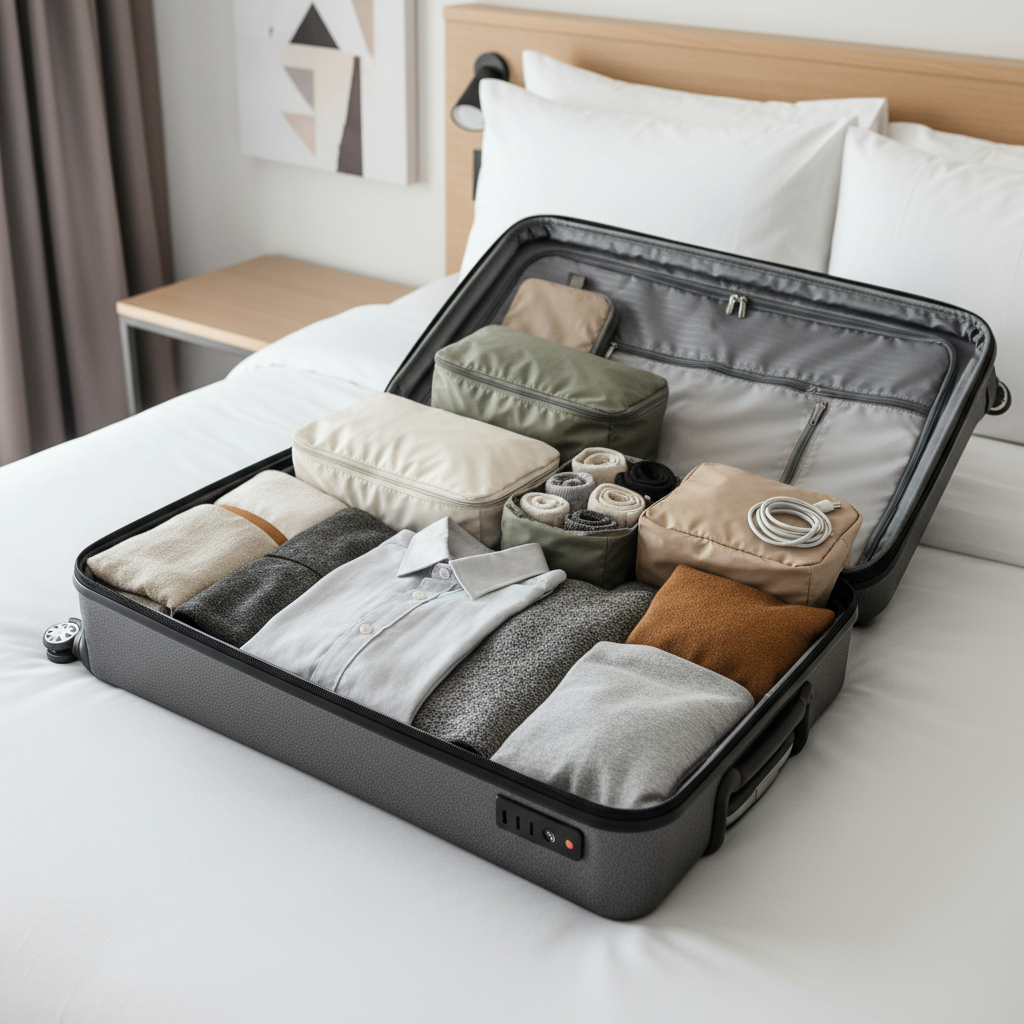
People sometimes assume cubes are only for “Type A” packers, but in practice they help the most when you’re busy, tired, or traveling with family and you need a system that works on autopilot. This guide breaks down what actually matters, how to set up a cube kit, and what to do when your trip has weird variables like bulky shoes or conference gear.
Why suitcases get messy (and how cubes fix the real problem)
Most luggage chaos comes from movement and mixing, not from “packing wrong.” Every time you pull out one item, the surrounding stack collapses a little, and by day two you’re living out of a fabric avalanche.
- Shifting in transit: overhead bins, car trunks, and hotel moves create constant jostling.
- Category mixing: socks end up with chargers, underwear slides under shirts, toiletries drift.
- No reset point: without containers, there’s nothing to “put back” into besides the suitcase void.
A packing cube travel organizer works because it creates small, stable zones. You pull one cube, everything else stays put. It’s not magic, it’s basic compartmentalization, but it’s surprisingly effective.
Quick self-check: do you actually need packing cubes?
If you’re on the fence, run through this quick list. If you check two or more, cubes usually earn their keep.
- You pack and unpack multiple times in one trip (multi-city, road trips, cruises).
- You share luggage space with a partner or kids and need clear boundaries.
- You travel for work and want outfits to stay grouped and presentable.
- You use a carry-on and need to maximize usable space without constant repacking.
- You hate digging for small items like sleepwear, gym gear, or cables.
If your trips are mostly one hotel, one bag, and you unpack into drawers immediately, cubes may be “nice” rather than necessary, though they still help with the flight-home mess.
Choosing a packing cube set that fits your trip style
Not all cube sets feel the same in real life. Some are better for tight carry-ons, others for big checked bags, and the wrong material can turn into a snagged-zip annoyance fast.
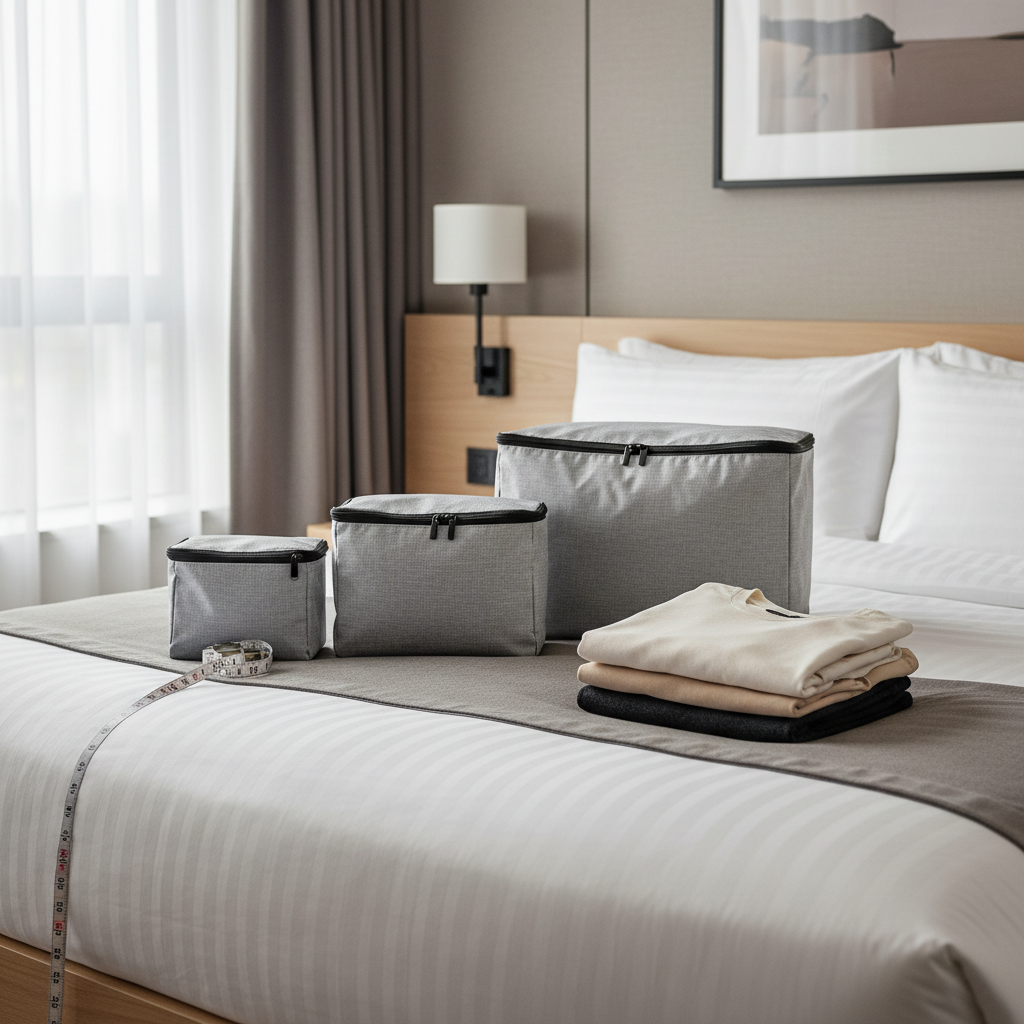
Size mix that works for most travelers
- 1 large cube: pants, sweaters, or a bulky “cold layer” kit.
- 2 medium cubes: tops, casual outfits, workout gear.
- 1 small cube: underwear, socks, sleepwear.
- Optional slim pouch: cables, adapters, small accessories.
A common mistake is buying too many large cubes. They fill fast, then become rigid bricks that don’t play well with suitcase corners.
Material and zipper details that matter more than branding
- Fabric: ripstop nylon or polyester tends to handle friction and overpacking better than thin mesh-only builds.
- Mesh panels: great for visibility, but full-mesh sides can stretch and deform if you stuff them.
- Zippers: smooth pulls and reinforced seams beat “compression gimmicks” that require wrestling.
Compression cubes can help, but they’re not always the win people expect. If you already pack tight, compression often shifts the problem to wrinkles or awkward suitcase shapes.
A practical cube layout for carry-on vs. checked luggage
This is where a packing cube travel organizer stops being an accessory and becomes a packing method. You’re building a layout you can repeat every trip.
Carry-on layout (speed and access)
- Medium cube 1: 2–3 tops + 1 bottom (outfit core)
- Medium cube 2: workout set or backup outfit
- Small cube: underwear/socks
- Shoes on the side, then fill gaps with a thin layer (jacket or tote)
Carry-on packing is less about “more space” and more about not disturbing the whole bag when TSA asks you to pull something out.
Checked bag layout (stability and categories)
- Large cube: bulky items or cold-weather layers
- Medium cubes: outfits grouped by day or by activity
- Small cube: intimates, swimwear, sleepwear
When you’re checking a bag, the bag gets thrown around more, so stable cubes reduce the internal shifting that leads to wrinkles and mixed piles.
Step-by-step: pack by “outfits,” not by clothing type
Here’s the move that changes everything: instead of putting all shirts together and all pants together, group by what you’ll actually wear in a day. It sounds obvious, but most people only try it after a few frustrating trips.
- Pick your “repeatable base”: one or two pants/jeans that match most tops.
- Create 3–5 outfit bundles: top + bottom + extras (belt, scarf) together.
- Use one cube per activity: work, casual, gym, beach, kids’ stuff.
- Keep a “dirty buffer”: bring one empty cube or laundry bag so clean items don’t mix.
According to TSA guidance, you may be asked to remove certain items during screening depending on your airport and lane setup, so keeping electronics and small accessories in a dedicated pouch can reduce the awkward repacking moment.
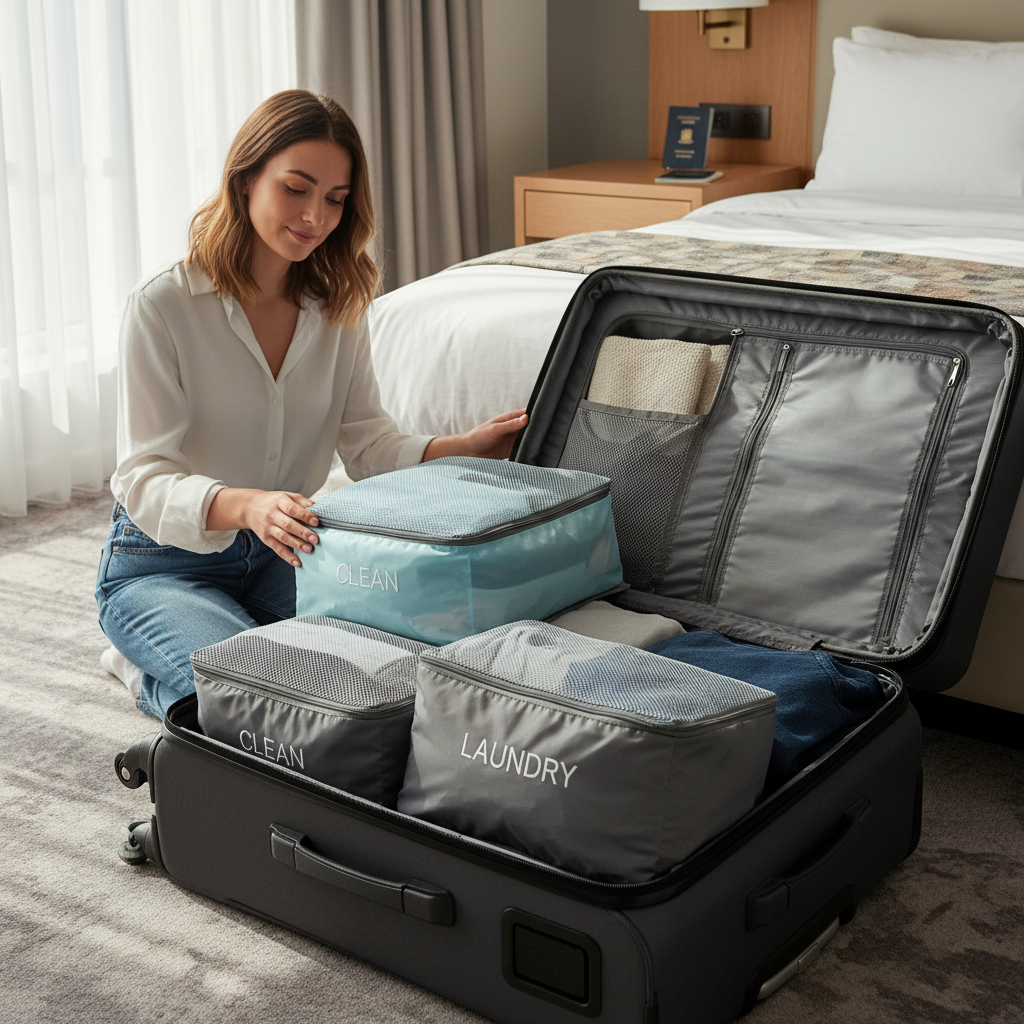
Key takeaway: the “outfit cube” approach reduces decision fatigue. You stop hunting for matching pieces, you just grab one cube and go.
Common mistakes (the ones that make cubes feel pointless)
- Overstuffing every cube: it creates hard lumps, strains zippers, and increases wrinkles.
- Mixing toiletries with fabric: leaks happen; isolate liquids in a dedicated pouch.
- No plan for returns: if you don’t reserve space for dirty clothes, your system collapses mid-trip.
- Buying a random set without measuring: some cubes waste space in smaller carry-ons.
A cube kit works best when you treat it like a repeatable template, not a one-off experiment you do the night before a flight.
Comparison table: cube types and who they fit
If you’re deciding what to buy, this quick table usually clarifies what’s worth prioritizing.
| Type | Best for | Trade-offs |
|---|---|---|
| Standard cubes (non-compression) | Most trips, everyday carry-ons | Less volume reduction |
| Compression cubes | Bulky clothing, limited suitcase depth | Can increase wrinkles, harder zips |
| Mesh-heavy cubes | Quick visibility, frequent hotel moves | Less structure, can stretch |
| Water-resistant cubes | Outdoor travel, beach trips, spill-prone kits | Less breathability for damp items |
When to get extra help (or switch your approach)
If packing consistently stresses you out, it may not be the cubes, it may be the constraints: medical devices, camera rigs, formalwear, or a long trip with multiple climates.
- Complex gear: consider camera inserts or structured organizers instead of soft cubes.
- Health needs: if you travel with medication or supplies, it’s often safer to keep essentials accessible; when in doubt, ask a pharmacist or medical professional about storage and temperature concerns.
- Chronic overpacking: a capsule wardrobe plan may help more than adding containers.
A packing cube travel organizer is a tool, not a cure-all. If your bag is always overweight, the most effective change is usually editing what you bring, not compressing it harder.
Wrap-up: a simple system you can repeat
If you want a cleaner trip, use cubes to lock in categories, then level up by grouping outfits so mornings stay easy. Pick a set that fits your luggage, leave one cube or bag for laundry, and you’ll spend less time repacking on the floor.
If you’re doing one thing today, measure your carry-on interior and choose a cube mix that matches it, that small step prevents most “why doesn’t this fit?” frustration.
FAQ
Do packing cubes actually save space in a carry-on?
Sometimes. Standard cubes mainly save usable space by preventing shifting, while compression styles can reduce volume a bit, though they may increase wrinkles or create awkward hard shapes.
How many cubes do I need for a 3–5 day trip?
For most people, 3–4 cubes cover it: two medium for outfits, one small for underwear and socks, plus an optional pouch for tech or accessories.
Is a packing cube travel organizer worth it for family travel?
Usually yes, because it creates clear boundaries per person or per kid. It also makes it easier to hand someone a single cube instead of managing loose items.
Should I roll or fold clothes inside cubes?
Rolling works well for tees and casual items, folding tends to look better for collared shirts. Many travelers mix both, folding structured pieces and rolling softer ones.
Where do shoes go when using cubes?
Shoes typically sit along the suitcase edge or in a shoe bag, then cubes stack beside them. If shoes are dirty or wet, isolate them so fabric stays clean.
What’s the easiest way to handle dirty laundry mid-trip?
Bring one empty cube or a lightweight laundry bag. As soon as items turn “used,” move them there so your clean cubes stay clean and you avoid the end-of-trip scramble.
Can I use packing cubes for road trips, not flights?
Yes, and they can feel even more useful because you can grab one cube for the night without dragging the whole suitcase into every stop.
Want an easier setup?
If you’re trying to build a repeatable kit, it helps to think in “modules” rather than random pouches, a small cube for basics, two mediums for outfits, and one spot reserved for laundry. If you want, share your luggage type and trip length, and I can suggest a cube layout that fits without forcing awkward gaps.