
First aid kit travel essentials matter most when something small threatens to ruin the day, a blister on mile two, a minor cut at a campsite, a headache that turns a long drive miserable, or an unexpected allergy flare. A travel kit isn’t about preparing for movie-level emergencies, it’s about handling the common stuff quickly, with the right items, in the right quantities.
If you’ve ever bought a pre-made kit and still ended up borrowing ibuprofen, hunting for tweezers, or improvising bandages, you already know the issue, many kits look complete but miss what travelers actually use. And for families, outdoor trips, cruises, or international travel, the “right” kit changes more than people expect.
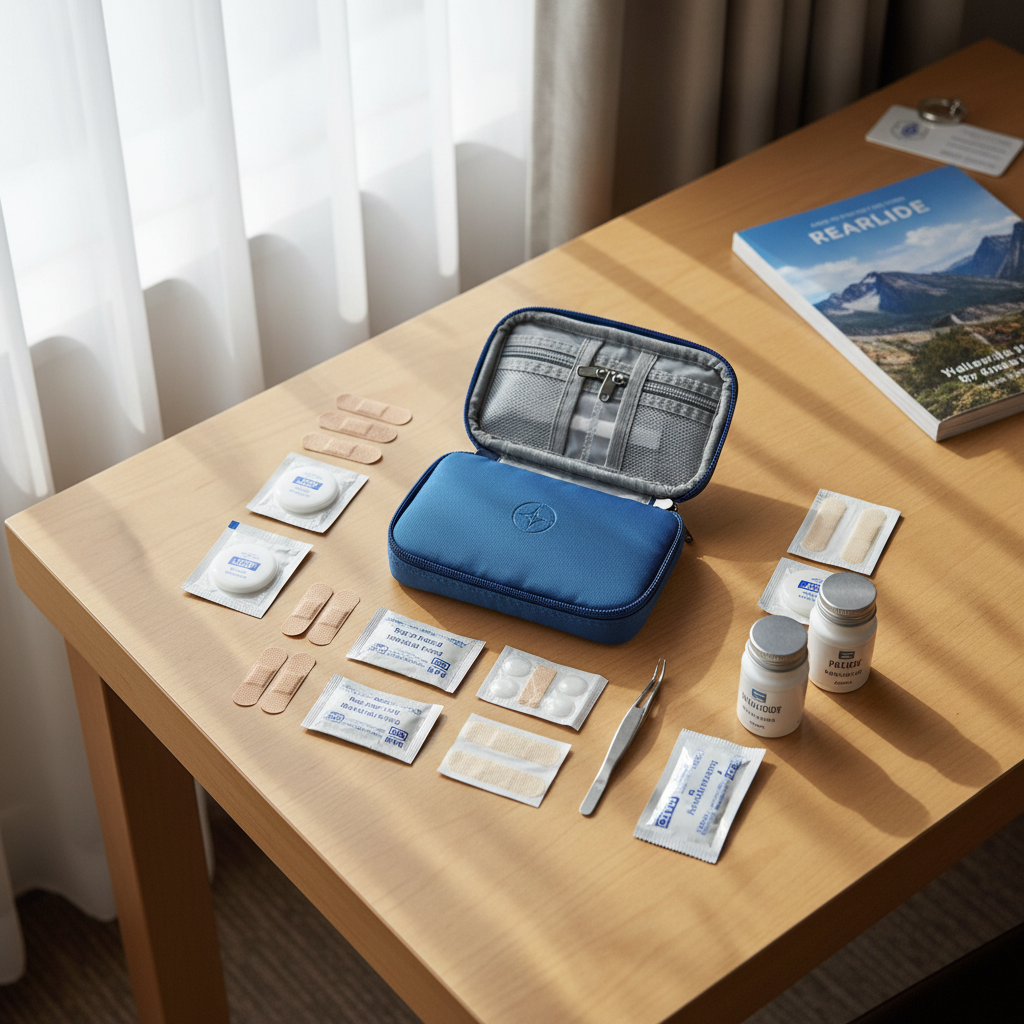
Below is a practical way to build a kit you’ll actually carry and use, plus a quick self-check to avoid overpacking. I’ll also call out common mistakes, like packing the “right” item in the wrong format, or bringing meds you can’t identify later.
What “travel essentials” really means (and why most kits miss)
Most travel first aid kits fail for predictable reasons, not because the buyer did something wrong. The kit is either built for a generic scenario, or it’s optimized for retail shelf appeal instead of real use.
- Wrong emphasis: too many random bandage sizes, not enough blister care or wound cleaning.
- Not travel-friendly: bulky packaging, awkward boxes, no resealable bags, items fall out after one use.
- Missing “small tools”: tweezers, small scissors, safety pins, thermometer, or tick remover depending on region.
- Medication mismatch: includes pills you don’t take, skips the ones you do, or has tiny quantities that run out fast.
According to the Centers for Disease Control and Prevention (CDC), travelers should plan for likely health needs and bring basic supplies and medicines, especially when access to familiar products may be limited. That’s the mindset: likely needs first, edge cases second.
Quick self-check: what kind of kit do you need?
Before you add anything, decide what you’re building for. This takes two minutes and saves you from hauling a brick through TSA and never opening it.
- Trip type: city, road trip, camping/hiking, cruise, international, remote areas.
- People: solo adult, couple, family with kids, group trip, older adults.
- Common issues: blisters, nosebleeds, motion sickness, migraines, allergies, asthma, GI upset.
- Access: will you have pharmacies nearby, or long gaps without services?
- Duration: weekend versus two weeks changes quantities more than item variety.
If you check “outdoors,” “kids,” or “remote access,” you usually want a slightly larger core kit plus a few add-ons. If you check “short city trip,” keep it lean and focus on the few items that solve 90% of annoyances.
The core first aid kit travel essentials (the non-negotiables)
These are the items that tend to earn their spot across most trips. Think of this as the base layer, then customize by scenario later.
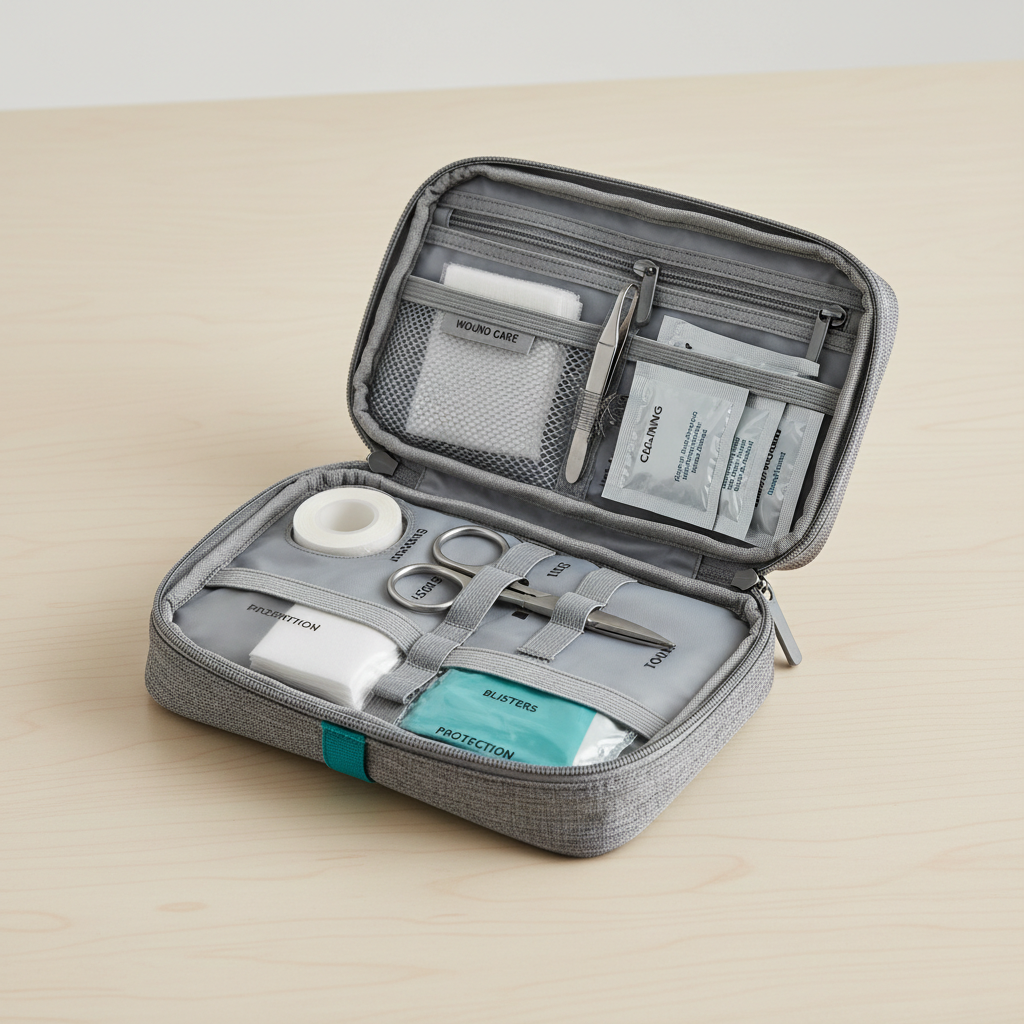
Wound care and cleaning
- Assorted adhesive bandages (include a few larger ones)
- Sterile gauze pads and a small roll of medical tape
- Antiseptic wipes or wound cleansing wipes (single-use packets travel well)
- Antibiotic ointment packets (less messy than a big tube)
- Hydrocortisone cream (itch, mild rashes)
Blister and friction management
- Blister cushions or hydrocolloid bandages (these save trips)
- Moleskin or friction-reducing strips
Tools and basics
- Tweezers (splinters, ticks, small debris)
- Small scissors (or trauma shears if you prefer)
- Nitrile gloves (a couple pairs)
- Digital thermometer (optional for ultralight kits, useful for families)
Common OTC meds (pack what you actually use)
For medications, it’s hard to give a one-size list because health histories differ. Still, many travelers carry small amounts of:
- Pain/fever reducer (acetaminophen or ibuprofen, follow label guidance)
- Antihistamine for allergies
- Anti-diarrheal medication (use cautiously, consider medical advice for severe symptoms)
- Oral rehydration salts or electrolyte packets
- Antacid for heartburn
Tip that prevents confusion: keep meds in original blister packs or clearly labeled containers, and check expiration dates before each big trip.
Build-by-scenario add-ons (pack less, but pack smarter)
This is where your kit becomes “yours.” Add a few targeted items instead of doubling everything.
Flying and long transit days
- Saline nasal spray (dry cabins)
- Motion sickness remedies if you’re prone
- Small pack of tissues, a couple alcohol wipes
Hiking, camping, national parks
- Insect bite/sting relief (topical)
- Tick removal tool if you’re in tick-prone regions
- Sunburn relief (aloe or similar)
- Extra blister care and a few more gauze pads
Beach, pool, cruise
- Waterproof bandages
- After-sun care
- Seasickness support (even if you “usually don’t get it,” cruises can surprise people)
Traveling with kids
- Kid-appropriate fever/pain medicine (dose guidance matters, ask a pediatrician if unsure)
- Extra bandages in kid-friendly sizes
- Barrier cream for chafing or mild irritation
According to the American Red Cross, a first aid kit should be tailored to activities and include supplies that fit the group’s needs. That’s especially true when you add outdoor time or children.
A simple packing table: essentials, optional, and “skip it”
If you want a fast build, this table keeps decisions practical. Adjust quantities based on trip length and headcount.
| Category | Pack This | Why It Earns Space |
|---|---|---|
| Must-have | Bandages, gauze, tape, antiseptic wipes, blister pads, tweezers, gloves | Covers most minor injuries and prevents infections |
| Strong optional | Hydrocortisone, antihistamine, thermometer, waterproof bandages | High usefulness in specific trips (kids, outdoors, allergy-prone) |
| Consider skipping | Too many duplicate tiny items, bulky full-size bottles, obscure tools you won’t use | Weight and clutter make the kit less likely to be carried |
How to pack and maintain your kit so it actually works
Even the right first aid kit travel essentials fail if they’re packed poorly. The goal is quick access, clear labels, and no leaks.
- Use a clear, zippered pouch or a small organizer with compartments, digging kills usefulness.
- Separate “wound care” from “meds,” especially if others may grab items quickly.
- Put liquids and creams in a mini zip bag to prevent messy surprises.
- Add a small card with allergies, emergency contacts, and key meds, helpful for group trips.
- Set a reminder to refresh before major travel, expired wipes and dried ointment show up more often than people admit.
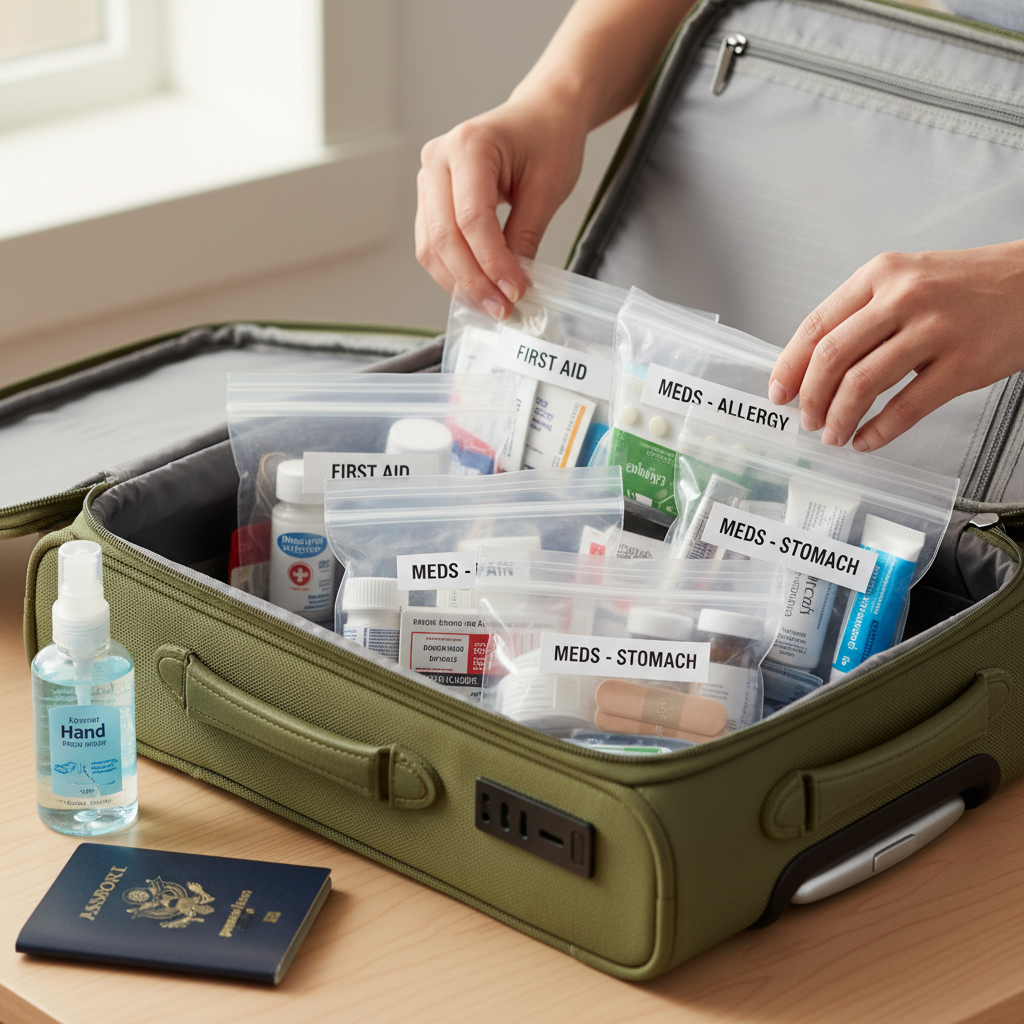
If you travel often, keep a “base kit” always ready, then add a small zip bag of trip-specific extras. That habit makes consistency easy.
Common mistakes that make a travel kit useless
Some mistakes are subtle. You think you packed the thing, but in the moment it’s the wrong version of the thing.
- Only packing bandages: without cleansing wipes and gauze, you’re limited.
- Forgetting blister prevention: treating blisters is slower than preventing them.
- Carrying unlabeled pills: it’s a safety risk and can create issues at borders in some situations.
- Not planning quantities: one or two wipes disappear fast with kids or multi-day hiking.
- Storing in a hot car: heat can degrade many products; rotate supplies if you keep a kit in the vehicle.
Also, don’t assume you’ll “just buy it there.” Sometimes you can, sometimes the brand/formula differs, language barriers complicate choices, or the nearest pharmacy is far from where the problem happens.
When to get professional help (don’t DIY everything)
A travel kit supports minor problems, it doesn’t replace medical care. Seek urgent help for symptoms that seem severe, worsening, or unfamiliar.
- Deep wounds, uncontrolled bleeding, or possible need for stitches
- Signs of infection such as spreading redness, warmth, pus, fever
- Allergic reactions with swelling of face/lips, breathing trouble, or rapid worsening
- Head injury with confusion, repeated vomiting, or severe headache
- Dehydration that doesn’t improve, severe abdominal pain, blood in stool
If you have chronic conditions, prescription meds, or a history of severe allergies, it’s smart to discuss travel preparedness with a clinician. That conversation tends to be short and very high value.
Key takeaways before you zip the bag
A good kit is small enough to travel with, but complete enough to solve the problems that actually happen. Start with a tight core, add scenario extras, then keep everything labeled and easy to reach. If you do one thing today, swap “random bandages” for blister care + wound cleaning, that’s where most travelers feel the payoff.
Next step: pick a pouch, build the base kit, and do a 5-minute refresh before each major trip so your supplies match your itinerary.
FAQ
What are the most important first aid kit travel essentials for a weekend trip?
Bandages, antiseptic wipes, a couple gauze pads with tape, blister cushions, tweezers, and the OTC meds you personally rely on. For a short trip, usefulness beats variety.
Should I buy a pre-made travel first aid kit or build my own?
Pre-made kits are fine as a base, but many people end up customizing anyway. If you buy one, check blister care, wipes, and tool quality, then add what’s missing.
How do I pack medications for air travel in the U.S.?
Keep meds clearly labeled, ideally in original packaging or labeled containers. For prescriptions, carrying the labeled bottle can prevent confusion if questions come up.
How much first aid gear do I need for a family trip?
More wipes, more bandages, and extra blister care than you think, plus kid-appropriate options if needed. Families usually burn through consumables quickly.
What should I add for hiking and camping?
Extra blister supplies, insect bite relief, and a tick tool in tick-prone areas, plus a few more gauze pads. Small additions make a big difference outdoors.
Can I bring scissors and tweezers in carry-on luggage?
Rules can vary by item size and agency guidance, so it’s wise to check current TSA guidance before you fly. When in doubt, pack in checked luggage or choose travel-safe alternatives.
How often should I replace items in a travel first aid kit?
Check before major trips and at least a couple times per year. Wipes dry out, creams separate, and expired meds tend to sneak up on frequent travelers.
If you’re building a kit and want it to feel simple, start by writing your itinerary at the top of a note, then choose first aid kit travel essentials that match your most likely “annoying problems,” not hypothetical disasters, that mindset usually creates a kit you’ll actually carry.