
how to stay warm on a cold flight starts with one unglamorous truth, airplane cabins often feel chilly even when you planned for “normal” travel comfort.
If you’ve ever spent a flight with cold hands, stiff shoulders, or that thin-blanket regret, you’re not imagining it, cabin temperature, low humidity, and sitting still for hours can combine into a perfect recipe for feeling cold.
This guide focuses on practical moves that actually work in a tight seat, what to wear, what to pack, how to use what the airline gives you, and when “I’m cold” might be a comfort issue versus something you should take more seriously.
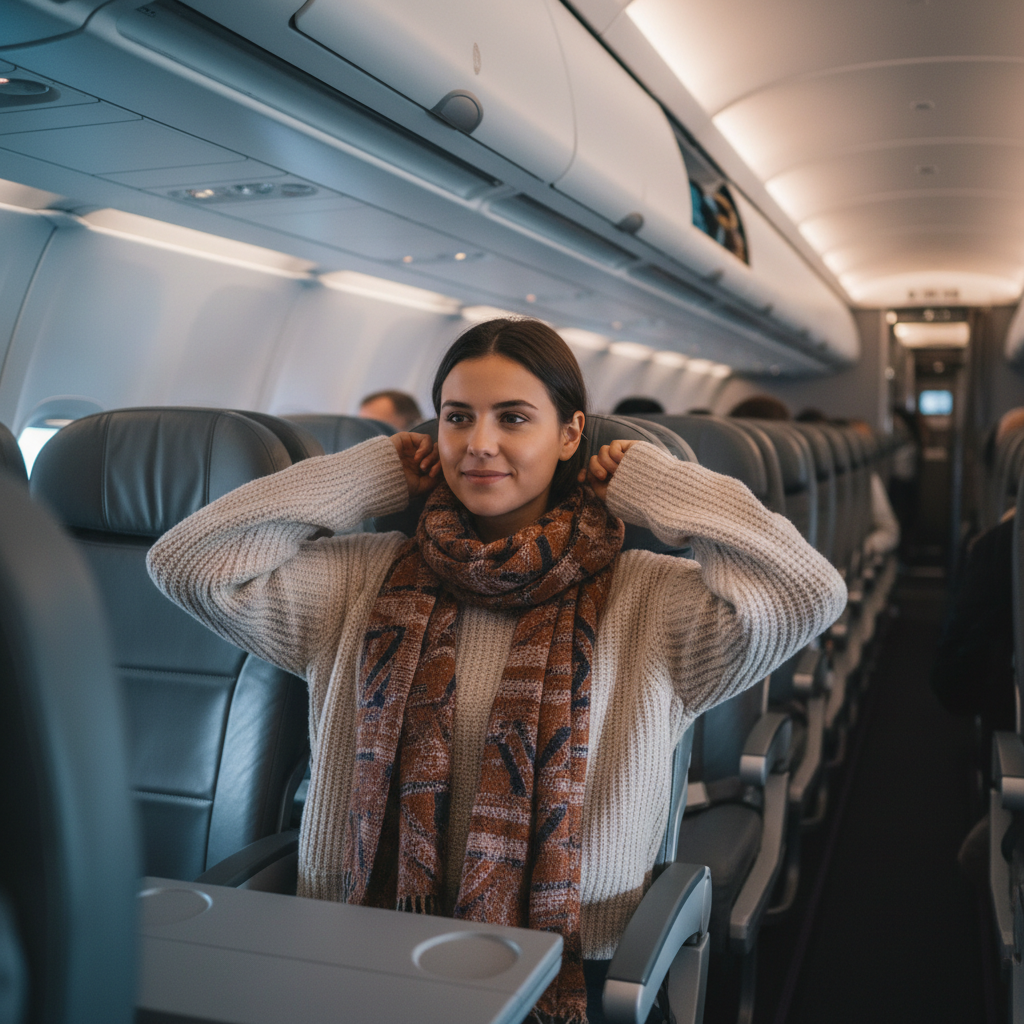
Why flights feel cold (and why it hits some people harder)
Airplanes run climate control for safety and consistency, not personal comfort, and many people feel the cold more intensely once they stop moving and start sitting still.
- Low humidity can make you feel cooler than the temperature suggests, dry air also makes skin and sinuses feel “tight,” which people often interpret as cold.
- Reduced movement matters more than most expect, when you’re sedentary, circulation slows a bit and extremities cool faster.
- Vent placement can create a personal wind tunnel, one open gasper vent aimed at your neck makes a “cold cabin” feel much worse.
- Clothing mismatch is common, travel outfits optimized for security lines or destination weather often fail in a refrigerated cabin.
According to the Centers for Disease Control and Prevention (CDC), cabin air tends to be very dry, which can contribute to discomfort during travel, dryness and chill frequently show up together.
Quick self-check: are you mildly chilly or truly not tolerating the cold?
Most of the time this is a comfort problem you can solve with layering and airflow control, but a quick check helps you decide whether to take extra steps.
Usually “normal cabin cold”
- You feel better after adding a layer or covering your feet
- Your hands warm up once you stop the air vent
- You can sleep once you’re insulated
Consider taking it more seriously
- Shivering that won’t settle after adding layers and drinking something warm
- Numbness or tingling that keeps spreading, especially with pain
- Fever, chills, or feeling “flu-ish” that seems unrelated to cabin temperature
- Raynaud’s symptoms such as fingers turning white/blue in cold air
If any symptoms feel intense or unusual for you, it’s reasonable to ask a flight attendant for help, and if you have a medical condition that affects circulation or temperature regulation, a clinician’s advice before flying can be worth it.
What to wear: the layering system that works in a narrow seat
If you’re deciding how to stay warm on a cold flight, clothing does most of the work, and it needs to be easy to adjust without turning your row into a wardrobe change.
Think in three layers
- Base layer (touching skin): soft, breathable, not bulky. Merino or a lightweight thermal top works well, but a long-sleeve tee can be enough for short flights.
- Mid layer (insulation): fleece, hoodie, or thin down. This is your main heat trap.
- Shell (wind control): a light jacket or overshirt helps if your vent or cabin draft feels aggressive.
Don’t skip the “small” items
- Socks: slightly thicker than you’d wear at home, cold feet can ruin the whole trip.
- Scarf or neck gaiter: high impact, low hassle, also doubles as a pillow cover.
- Beanie (optional): if you’re prone to cold, a thin beanie is surprisingly effective and easy to stash.
A simple rule that holds up, if you can remove one layer without standing up, you chose well.
Pack smart: a small “warmth kit” that fits in your personal item
You don’t need a suitcase full of gear, you need a few items that solve specific problems: drafts, cold feet, and heat loss while sleeping.
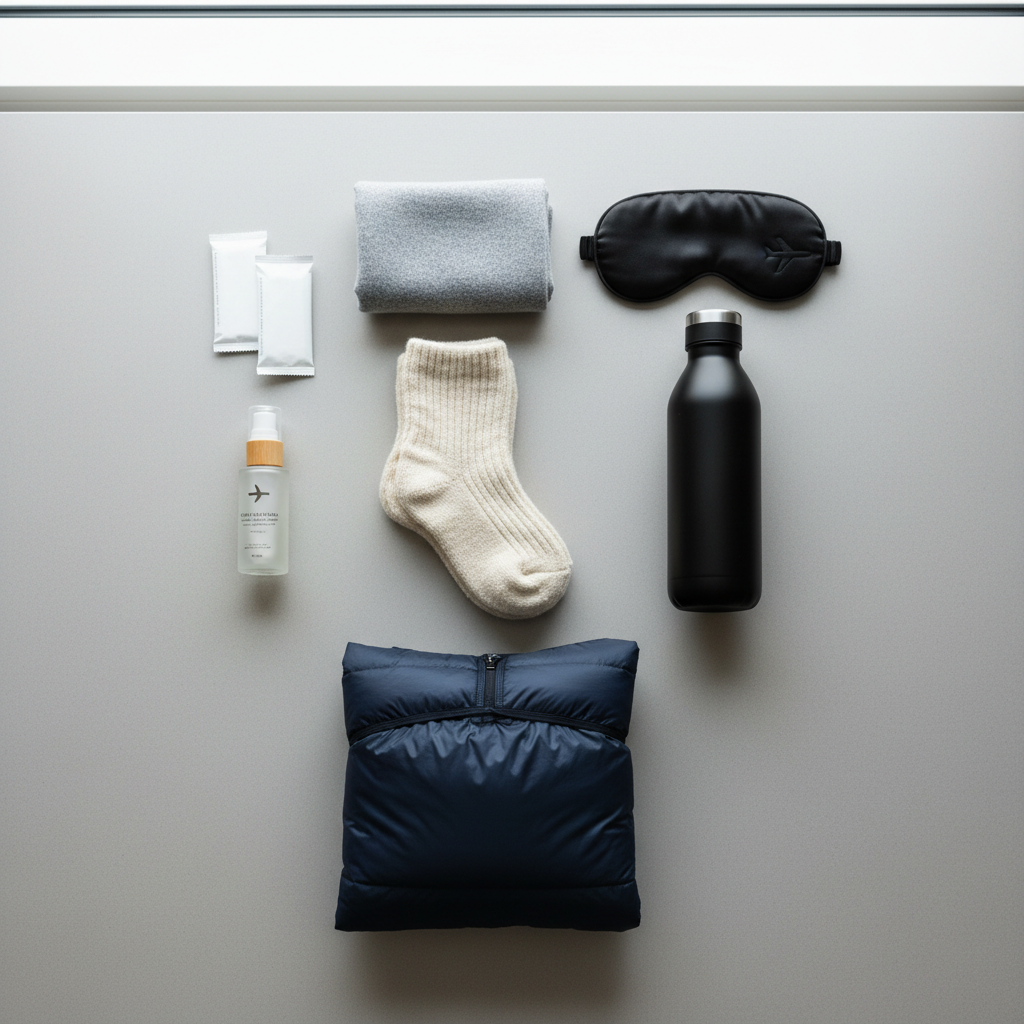
High-value items (choose what fits your style)
- Compression or warm socks for long flights, compression can also help with leg comfort for some people.
- Travel blanket or large wrap if you regularly freeze, airline blankets vary a lot by carrier and route.
- Disposable hand warmers, helpful if you get painfully cold hands, check local rules and use as directed.
- Empty insulated bottle to fill with hot water after security if available, treat it like a comfort item, not a medical device.
One caution, anything with lithium batteries or heating elements has airline rules that vary by product, so check your airline and the TSA guidance if you plan to bring an electric warmer.
In-seat tactics: warmth without annoying your neighbor
Once you board, small adjustments matter more than people think, especially if your seat gets blasted by cold air for hours.
Control airflow first
- Aim your vent away from face, neck, and hands, or close it completely.
- Use the vent strategically if you run hot later, pointing it upward can reduce “cold wind” sensation.
- Seal gaps by using your scarf at the collar area, drafts around the neck are common.
Insulate contact points
- Cover your lap early, even before you feel cold, this helps prevent that slow chill.
- Keep feet off the bare floor when possible, place a bag under your feet like a footrest, as long as it doesn’t block others.
- Warm your hands by tucking them under your thighs for a minute, it sounds silly, but it works when you can’t do much else.
And yes, you can ask for an extra blanket, many crews will help when supplies allow, but on full flights it’s not guaranteed.
Food, drinks, and hydration: warmth you can feel from the inside
Part of how to stay warm on a cold flight is avoiding the “empty tank” feeling, when you’re hungry, dehydrated, or both, you often feel colder.
What tends to help
- Warm beverages like tea or hot water, simple, calming, and usually available.
- Protein-forward snacks like nuts, jerky, or a sandwich, they keep energy steadier than candy.
- Regular water in small amounts, low humidity can sneak up on you.
What can backfire
- Alcohol may make you feel warm at first, but it can increase heat loss and disrupt sleep for many people.
- Too much caffeine can make you jittery, which some people interpret as feeling cold.
According to the Federal Aviation Administration (FAA), the cabin environment is pressurized and managed for safety, but comfort can vary, using hydration and smart nutrition is a practical way to manage that variability.
Comfort upgrades by seat and flight type (use what you can control)
Cabin temperature isn’t evenly distributed, and your seat choice can affect your odds of feeling cold.
Typical cold spots
- Window seats can feel cooler due to the wall surface and drafts, great for sleeping, not always great for warmth.
- Bulkhead rows often have more open space in front, which sometimes feels draftier.
- Near galleys and doors can be cooler on some aircraft, and noisier, which makes it harder to relax.
A quick decision table
| Situation | What to do before boarding | What to do in-seat |
|---|---|---|
| Short flight, you “usually run cold” | Wear a mid layer, pack warm socks | Close vent, cover lap early |
| Long-haul or red-eye | Add a base layer, bring wrap/blanket | Build a sleep cocoon, keep neck warm |
| Window seat | Bring scarf or light shell | Insulate shoulder/arm against wall |
| You overheat easily | Use breathable base, avoid heavy coat | Vent upward, layer on/off as needed |
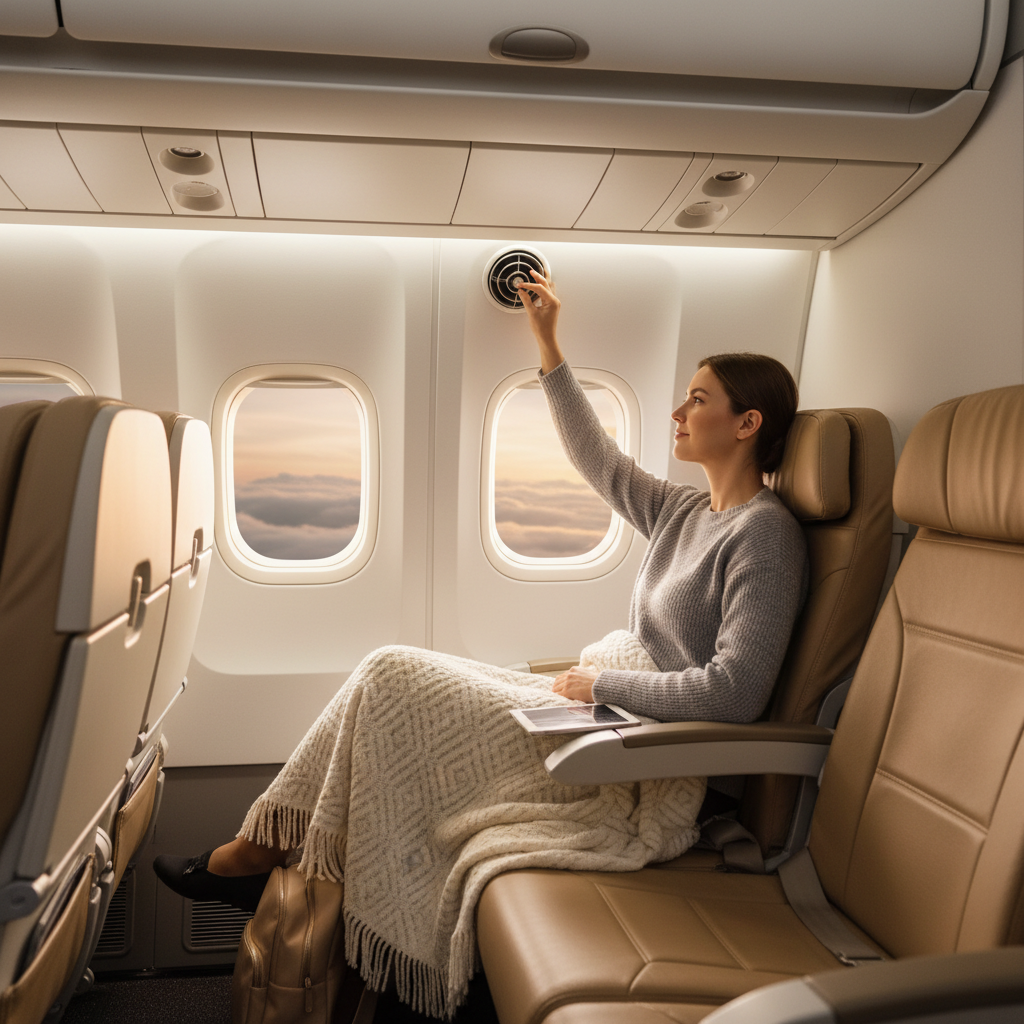
A simple step-by-step plan for your next cold cabin
If you want a repeatable routine, this is the one most travelers can follow without overthinking.
- Before leaving home: choose a base + mid layer, add socks you’d be happy to nap in.
- Before boarding: put your warm layer in the top of your bag so you can grab it fast.
- After takeoff: close or redirect the vent, cover lap and feet before you feel cold.
- Mid-flight: drink water, add a warm drink if available, do small ankle circles and shoulder rolls to keep circulation moving.
- When trying to sleep: keep neck warm, pull the blanket under your arms to reduce drafts.
Key takeaway: prevent the chill early, catching up once you’re already cold takes more effort and more layers.
Common mistakes that keep people cold
These are the moves that look reasonable, but often fail in real cabin conditions.
- Wearing a heavy coat with nothing underneath, bulky outerwear isn’t great insulation when you sit on it or can’t seal drafts.
- Ignoring feet, cold toes tend to spread into full-body discomfort.
- Leaving the vent on “just a little”, that steady airflow can undo everything else.
- Trying to warm up with alcohol, it may feel comforting, but many people end up colder later.
When to ask for help or plan ahead with a professional
Most flyers just need better layers, but a few situations deserve more planning.
- If you have circulation issues, autoimmune conditions, or frequent numbness, asking a clinician about flight comfort strategies may help.
- If you feel severe chills, confusion, chest pain, or shortness of breath, alert crew promptly, this goes beyond “cold cabin.”
- If anxiety makes you feel cold, grounding techniques and breathing exercises can help, and a mental health professional can offer personalized tools if it’s a pattern.
According to the Transportation Security Administration (TSA), what you can carry and how you pack items like gels, liquids, or certain devices has specific rules, so double-check if your warmth plan includes specialty items.
Conclusion: stay warm without overpacking
how to stay warm on a cold flight usually comes down to two things, wear adjustable layers and manage airflow early, then support it with warm feet, a covered neck, and steady hydration.
If you do one thing today, build a tiny warmth kit in your personal item so you’re not relying on whatever blanket happens to be onboard, if you do a second thing, treat the air vent like a tool, not background noise.
Next time you book, take ten seconds to think about seat location and flight length, then dress for the cabin first and the destination second, you can always peel layers off once you land.