
How to clean luggage inside and out usually comes down to three things: what the suitcase is made of, what kind of mess you’re dealing with, and how fast you need it dry before the next trip.
If you’ve ever opened a suitcase and caught a musty smell, or noticed scuffs and grime that won’t wipe off, you already know why this matters, luggage sits on airport floors, rides in trunks, and gets handled by a lot of hands.
This guide breaks the job into quick triage, a deeper clean for the interior lining, and a careful exterior wash that won’t damage coatings, zippers, wheels, or leather trim. I’ll also call out the common mistakes that make stains set or warp panels.
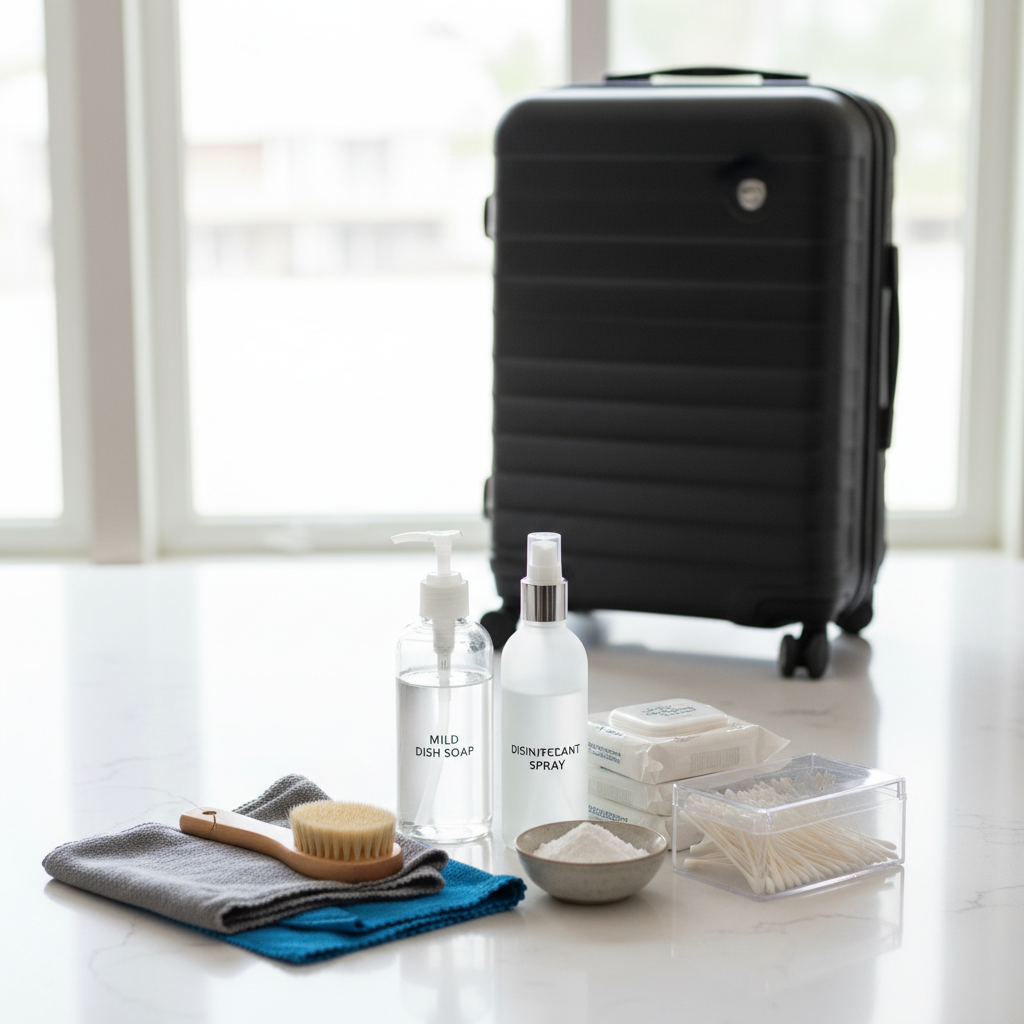
Before You Start: Materials, Colorfastness, and a 2-Minute Triage
Before you scrub anything, take a breath and identify the material, hard-shell polycarbonate/ABS, fabric (nylon/polyester), leather accents, or aluminum. Each reacts differently to moisture, alcohol, and abrasion.
- Empty everything, including hidden pockets, luggage tag sleeves, and the zipper track.
- Vacuum first using a crevice tool, crumbs turn into paste once you add cleaner.
- Spot test any cleaner in an unseen area, especially on dyed fabric linings.
- Check damage, loose stitching, cracked corners, sticky telescoping handle, wobbly wheels.
If your suitcase has visible mold, heavy pet waste, or bodily fluids, it may be safer to use a professional cleaner, or consider replacement. Some contamination risks are hard to fully address at home.
Quick Reference Table: What to Use (and What to Avoid)
When people struggle with how to clean luggage inside and out, it’s often because they’re using a cleaner that’s too harsh for the finish, or too wet for the construction.
| Surface / Part | Usually Safe Options | Avoid | Notes |
|---|---|---|---|
| Hard shell (polycarbonate/ABS) | Warm water + mild dish soap, microfiber cloth | Abrasive pads, strong solvents | Use light pressure to prevent dulling. |
| Fabric exterior (nylon/polyester) | Upholstery-safe cleaner, diluted soap, soft brush | Bleach, oversoaking | Too much water can wick into seams. |
| Interior lining | Vacuum, gentle soap, baking soda deodorize | Flooding with water | Linings can trap moisture under panels. |
| Zippers | Dry brush, cotton swab, light soap wipe | Oil-based lubes on fabric | Wax-based zipper lubricant is usually cleaner. |
| Wheels | Soapy wipe, old toothbrush, tweezers for hair | WD-40 as a cleaner | Lubricate only if squeaking after cleaning. |
| Leather trim/handles | Leather cleaner/conditioner | Alcohol, soaking | Condition lightly to prevent cracking. |
According to the CDC, cleaning removes germs and dirt from surfaces, while disinfecting uses chemicals to kill germs on surfaces, choosing one depends on your situation and who will handle the item.
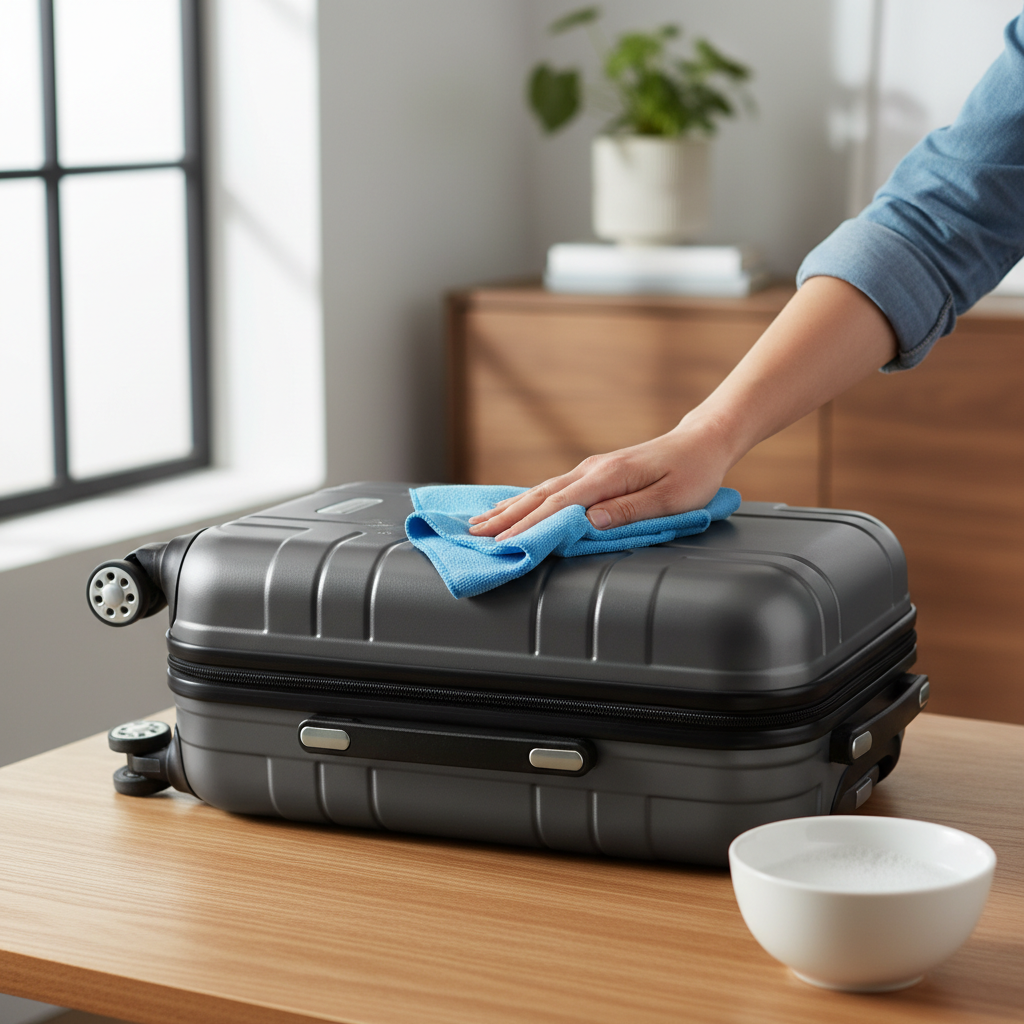
How to Clean the Inside: Lining, Pockets, Odors, and Stains
The interior is where smells and mystery stains hang around. A good inside clean is mostly dry work first, then controlled moisture.
Step-by-step interior clean
- Vacuum thoroughly, seams, zipper corners, and around interior frames.
- Wipe hard interior panels (if present) with a cloth dampened in mild soapy water, then wipe again with plain water.
- Clean the lining with a lightly damp microfiber cloth, work in small sections so it dries fast.
- Spot treat stains: dab, don’t rub. A small amount of gentle laundry detergent diluted in water often works for food and makeup.
- Deodorize by sprinkling baking soda, leave it a few hours, then vacuum it out.
If odor persists, you can try placing activated charcoal bags inside for a day or two. Avoid heavy perfume sprays, they usually mix with old smells and get worse.
Sanitizing, when it makes sense
If you traveled during a cold/flu season, stayed somewhere with bedbugs, or had the suitcase handled in high-contact settings, you may want to disinfect high-touch areas like handles and zipper pulls. Use a product labeled for the surface and follow contact time on the label, and keep ventilation decent.
How to Clean the Outside: Hard Shell vs Fabric Without Ruining the Finish
This is the part most people overdo, too much water, too much pressure, or the wrong tool. Cleaning the exterior should leave the finish intact and the suitcase still looking “normal,” not sanded down.
Hard-shell exterior (polycarbonate/ABS)
- Mix warm water with a few drops of dish soap.
- Wipe with a microfiber cloth, then use a soft brush for textured areas.
- Rinse by wiping with a clean damp cloth, avoid spraying water directly into seams.
- Dry immediately with a towel, then air-dry with the case open.
For scuff marks, a melamine sponge can work lightly, but it’s mildly abrasive, test first and use minimal pressure so you don’t create a dull patch.
Fabric exterior (nylon/polyester)
- Brush off dry dirt first.
- Use a diluted soap solution and a soft brush, scrub gently in one direction.
- Wipe away residue with a damp cloth rather than soaking.
- Let it dry fully in a ventilated area, out of direct harsh sun that can fade fabric.
If your bag has a water-repellent coating, aggressive cleaners can strip it. When in doubt, stick to mild soap and less water.
Don’t Skip the Hardware: Wheels, Handles, Zippers, and Corner Guards
If you only clean the panels, the suitcase may still feel grimy. Wheels and handles collect the worst gunk, and they affect how the bag performs.
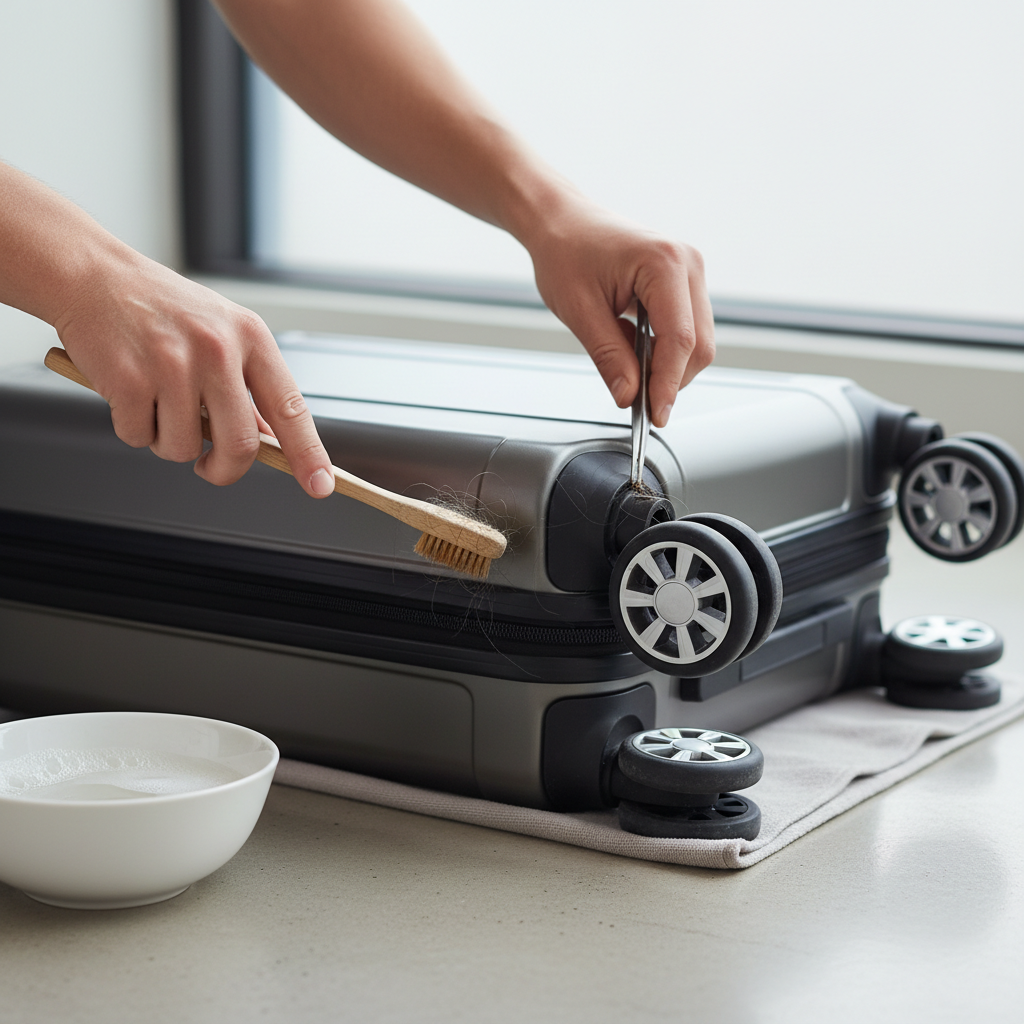
- Wheels: pull out hair and threads with tweezers, scrub with an old toothbrush and soapy water, wipe dry. If they squeak after cleaning, a small amount of silicone-based lubricant may help, avoid getting it on fabric.
- Telescoping handle: wipe the rails with a damp cloth, then dry, grime here often causes sticking.
- Zippers: use a dry brush to clear grit, then wipe teeth gently. If sticking persists, a wax zipper lubricant is usually neater than oily products.
- Rubber corner guards: soapy wipe and a rinse wipe, dirt hides in the texture.
A Simple Routine You Can Repeat After Every Trip
If you travel often, learning how to clean luggage inside and out is less about marathon deep-cleans and more about a small routine that keeps buildup from becoming a project.
10-minute reset (after most trips)
- Empty and vacuum quickly.
- Wipe handles, zipper pulls, and the most scuffed exterior areas.
- Check wheels for hair and debris.
- Air out overnight with the suitcase open.
Seasonal deep clean (every few months, or after messy trips)
- Full inside wipe-down, spot treat stains.
- Exterior wash appropriate to shell or fabric.
- Detail hardware, then dry thoroughly before storing.
Key point: drying time matters as much as cleaning. Storing even slightly damp luggage is a reliable way to invite that musty smell back.
Common Mistakes That Make Luggage Look Worse
- Over-wetting fabric, moisture wicks into padding and takes forever to dry, smells follow.
- Using bleach or harsh disinfectants on colored textiles, fading and weak seams are common outcomes.
- Scrubbing scuffs aggressively on hard shells, you can trade a scuff for a permanently dull spot.
- Oiling zippers and wheels indiscriminately, oil attracts dust and can stain fabric panels.
- Closing the suitcase to “let it dry”, that just traps humidity inside.
When to Consider Professional Help (or Replacement)
Home cleaning covers most everyday grime, but a few situations are worth escalating. If you see extensive mold growth, smell a strong mildew odor that won’t fade after full drying, or have contamination from bodily fluids, a professional cleaner may be safer, and in some cases replacement makes more sense than trying to salvage the bag.
For structural issues like cracked shells, broken wheel housings, or jammed telescoping handles, check the brand’s repair program first. Many luggage companies offer parts or repairs that cost less than buying new.
Conclusion: A Cleaner Suitcase, Fewer Surprises Next Trip
Knowing how to clean luggage inside and out is really about being gentle, staying controlled with moisture, and focusing on the parts you touch and roll. If you do the quick reset after travel and save the deep clean for when it’s actually needed, your suitcase tends to last longer and smell a lot less like “last month.”
If you have a trip coming up, do one practical thing today: vacuum the inside and wipe the handles and wheels, then let the bag air out fully before you pack again.
FAQ
How do I clean luggage inside and out without damaging the material?
Start by identifying hard shell vs fabric, then use mild soap and minimal water, and always spot test. Most damage happens from harsh chemicals or soaking, not from routine wiping.
Can I use disinfecting wipes on a suitcase?
Often yes on hard handles and smooth shells, but check the wipe label and test on a small area first. On fabric, wipes can leave discoloration or residue, so a gentle cleaner may be safer.
What removes musty smell from suitcase lining?
Vacuuming, then baking soda for a few hours, then thorough drying helps in many cases. If the smell persists, activated charcoal can help absorb odors, and persistent mildew may require professional attention.
How do I get scuff marks off a hard-shell suitcase?
Try mild soapy water first. If scuffs remain, a lightly used melamine sponge can help, but use gentle pressure and spot test since it can dull glossy finishes.
How do I clean suitcase wheels that won’t roll smoothly?
Remove hair and threads, scrub with a toothbrush and soap, and dry fully. Only consider lubricant if the wheel still squeaks or sticks after cleaning, and keep it away from fabric.
Is it safe to wash a suitcase in the bathtub or with a hose?
For many fabric suitcases, soaking can trap water in padding and seams, so a controlled wipe-and-brush approach is usually safer. Some hard shells can tolerate a gentle rinse, but avoid blasting water into zippers and seams.
How long should luggage dry before storing?
Until it feels completely dry inside and out, which can mean overnight or longer for fabric. If you’re unsure, leave it open in a ventilated area another few hours.
If you’re already doing the basics but the suitcase still smells off, stains keep reappearing, or hardware feels rough, you may prefer a more hands-off approach, a local luggage repair shop or professional cleaner can often tell you quickly whether it’s worth restoring or smarter to replace.