
how to plan a new zealand road trip comes down to three things: picking the right island (or split), building a realistic day-by-day driving plan, and locking in the few bookings that actually sell out.
If you’re visiting from the U.S., the hard part usually isn’t "what to see"—it’s the trade-offs. Distances look short on a map, weather changes fast, and the best experiences (great hikes, scenic roads, small-town stays) often require committing to a route before you feel “ready.”
This guide keeps it practical: how to choose a route that matches your travel style, how many days you truly need, where budgeting surprises show up, plus a simple checklist to turn ideas into an itinerary you can drive without stress.
Start With the Big Decisions (They Shape Everything Else)
The fastest way to reduce planning overwhelm is to decide your non-negotiables early, because New Zealand road trips get messy when you try to “do it all.”
- North Island vs. South Island: North skews geothermal areas, Māori cultural experiences, beaches, wine, and cities. South skews mountains, glacial lakes, hikes, and “wow” drives.
- One-way or loop: One-way itineraries save backtracking but can cost more due to rental drop fees and flight timing.
- Season: Summer offers long daylight and busier roads. Shoulder seasons can feel calmer but weather can be more variable, especially in alpine areas.
- Trip pace: If you hate packing daily, plan fewer bases and add day trips. If you love variety, accept more check-ins and shorter drives.
According to Tourism New Zealand... many visitors underestimate drive times on rural roads, so it’s smart to plan with buffer time rather than stacking activities edge-to-edge.
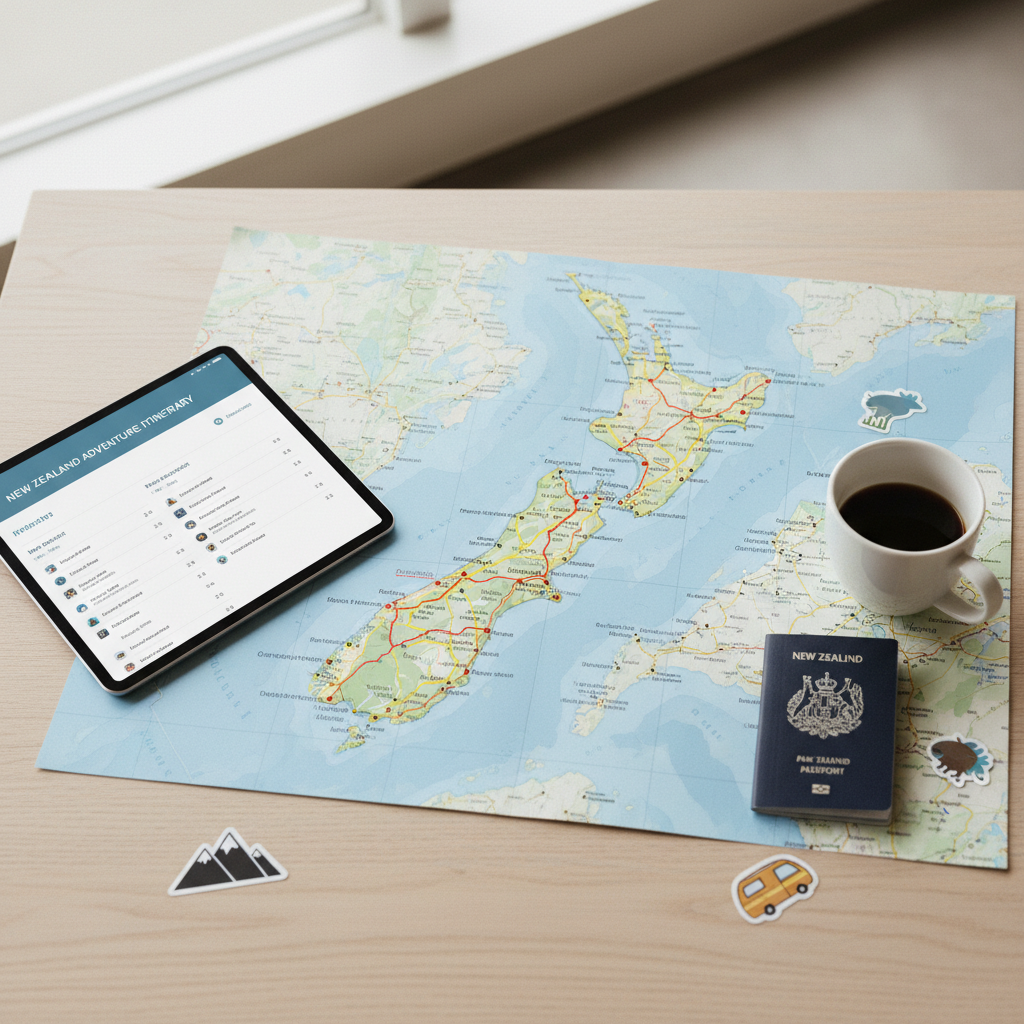
How Many Days You Need (Realistic Time Windows)
Time is the main limiter. When people ask how to plan a new zealand road trip, what they usually mean is “how do I stop my itinerary from turning into a driving marathon?” This is the simplest way to think about it:
- 6–8 days: Pick one island and one “spine” route, keep driving days short.
- 9–14 days: One island in depth, or a highlights split across both islands with flights to avoid long cross-country drives.
- 15–21 days: Both islands with room for weather days and slower towns.
Typical driving comfort zones (especially if you’re not used to left-side driving): many travelers enjoy 2–4 hours of driving on most days, with an occasional longer day if the views are the point.
Choose a Route Template (Then Customize)
You don’t need a “perfect” route, you need a route that matches your priorities. Below are templates that fit common U.S. traveler patterns, then you can swap stops based on interests.
South Island Classic Loop (10–14 days)
- Christchurch → Lake Tekapo / Aoraki Mt Cook
- Queenstown (base for day trips)
- Te Anau → Milford Sound day trip or overnight
- Wanaka → West Coast (optional) → back toward Christchurch
North Island Highlights (7–10 days)
- Auckland → Bay of Islands (or Coromandel)
- Rotorua / Taupō (geothermal + lakes)
- Wellington (food, museums, ferry gateway)
Both Islands “Fly + Drive” (12–16 days)
- Drive North Island core (Auckland → Rotorua/Taupō → Wellington)
- Fly Wellington → Queenstown (or Christchurch)
- Drive South Island highlights
That last option is often the sweet spot if you’re short on time, because you avoid turning the inter-island transfer into a full-day logistics puzzle.
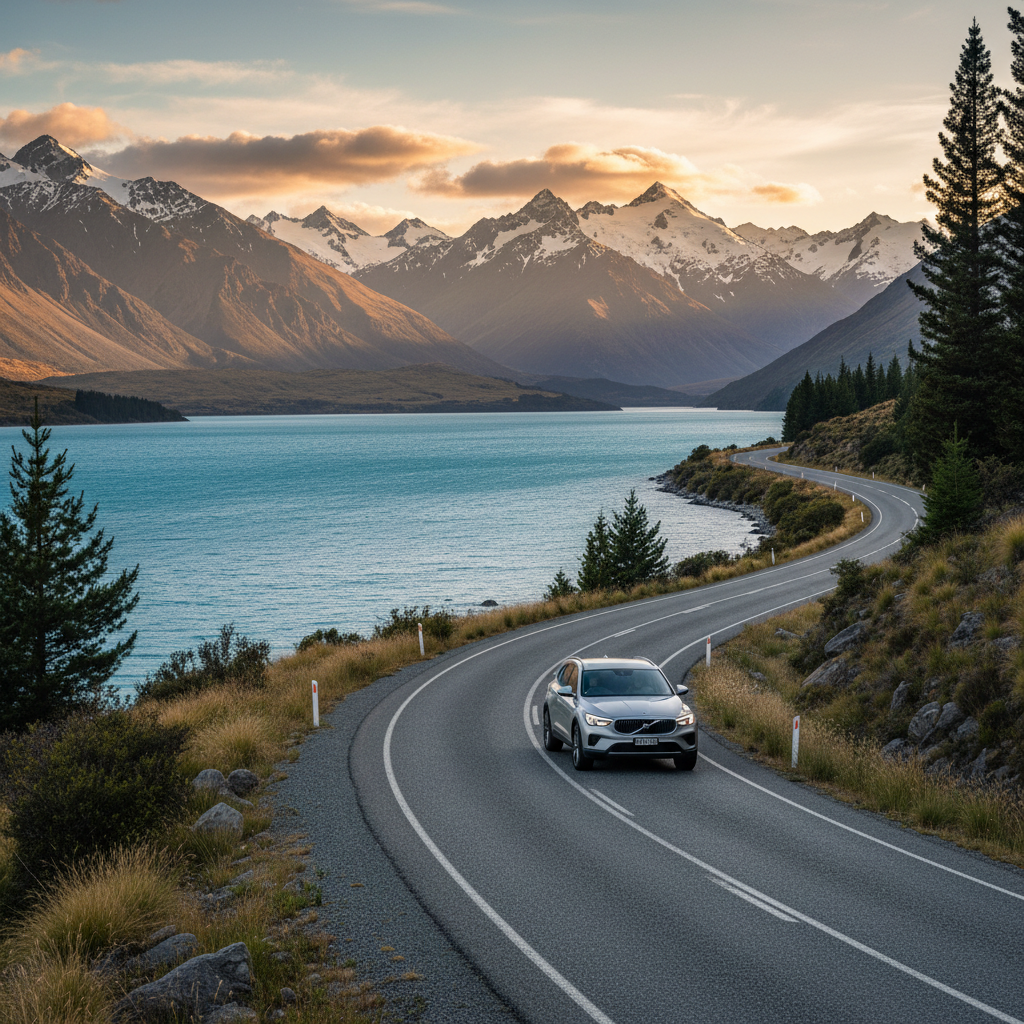
Budget and Booking: What Usually Costs More Than Expected
New Zealand can be straightforward to budget, but a few categories surprise people: vehicle costs, one-way fees, and peak-season lodging. If you’re mapping how to plan a new zealand road trip efficiently, budget early so you don’t design a route you won’t want to pay for.
Quick budget planning table (fill with your numbers)
| Cost Category | What to include | Planning note |
|---|---|---|
| Flights | U.S. to NZ, plus any inter-island flights | Open-jaw (into one city, out of another) can save backtracking |
| Rental vehicle | Base rate, insurance/coverage, one-way drop fee | Compare a loop route vs. one-way before committing |
| Fuel | Gas/petrol, detours, longer scenic drives | Remote areas can add distance quickly |
| Lodging | Hotels, motels, holiday parks | Book popular towns earlier in peak season |
| Activities | Boat cruises, guided hikes, adventure sports | Prioritize 2–3 “must-dos,” keep the rest flexible |
| Food | Groceries, cafes, occasional splurges | Mix restaurant nights with simple grocery meals to control spend |
Key point: book the things that truly cap out (Milford Sound cruise times, popular small lodges, peak-season car rentals) and leave the “nice-to-have” activities as optional add-ons.
Build the Itinerary: A Simple Planning Workflow
This is the part that turns a messy list of pins into a driveable trip. Keep it mechanical, it works.
Step-by-step
- Step 1: Choose 2–4 base towns for your timeframe, then add day trips.
- Step 2: For each driving day, pick one “anchor” activity and one backup.
- Step 3: Add time buffers for photo stops, snacks, and slower roads.
- Step 4: Put check-in times on your plan, then work backward.
- Step 5: Reserve the high-stakes bookings, leave flexibility elsewhere.
A realistic daily structure (example)
- Morning: drive 1.5–2.5 hours + short scenic stop
- Midday: main activity (hike, cruise, museum)
- Late afternoon: check in + easy walk or nearby viewpoint
- Evening: simple dinner plan, early night if the next day is a long drive
It sounds basic, but it prevents the classic problem: stacking three “must-dos” in one day, then realizing you’ll arrive after everything closes.
Self-Check: Are You Overplanning or Underplanning?
If you want to know whether your plan is realistic, run this quick check. Most issues show up immediately.
- Driving load: Do you have more than two days over 4 hours of driving in a 7–10 day trip?
- Too many stops: Are you changing lodging almost every night?
- No weather flexibility: Are all your “must-dos” outdoors with zero backup?
- Booking gaps: Are you arriving in a small town on a weekend in peak season with no lodging reserved?
- Energy mismatch: Are you mixing intense hikes with late-night drives on the same day?
If you answered “yes” to two or more, trim stops or add a rest day. New Zealand rewards slower travel, even if your brain wants to maximize the map.
Safety and Driving Tips Americans Often Miss
Driving is usually straightforward, but the adjustment is real. According to Waka Kotahi NZ Transport Agency... visitors should prepare for left-side driving, narrow roads, and changing conditions, and plan rest breaks to reduce fatigue.
- Left-side driving: Give yourself a “low-pressure” first day near your arrival city.
- Road types: Many scenic routes are two-lane and slower than U.S. highways.
- Weather changes: Alpine passes and coastal roads can shift quickly, keep plans flexible.
- Breaks: If you feel tired or stressed, stop earlier than you think you need.
This isn’t medical advice, but if you have conditions that affect alertness or motion tolerance, it may help to consult a healthcare professional before long driving days.
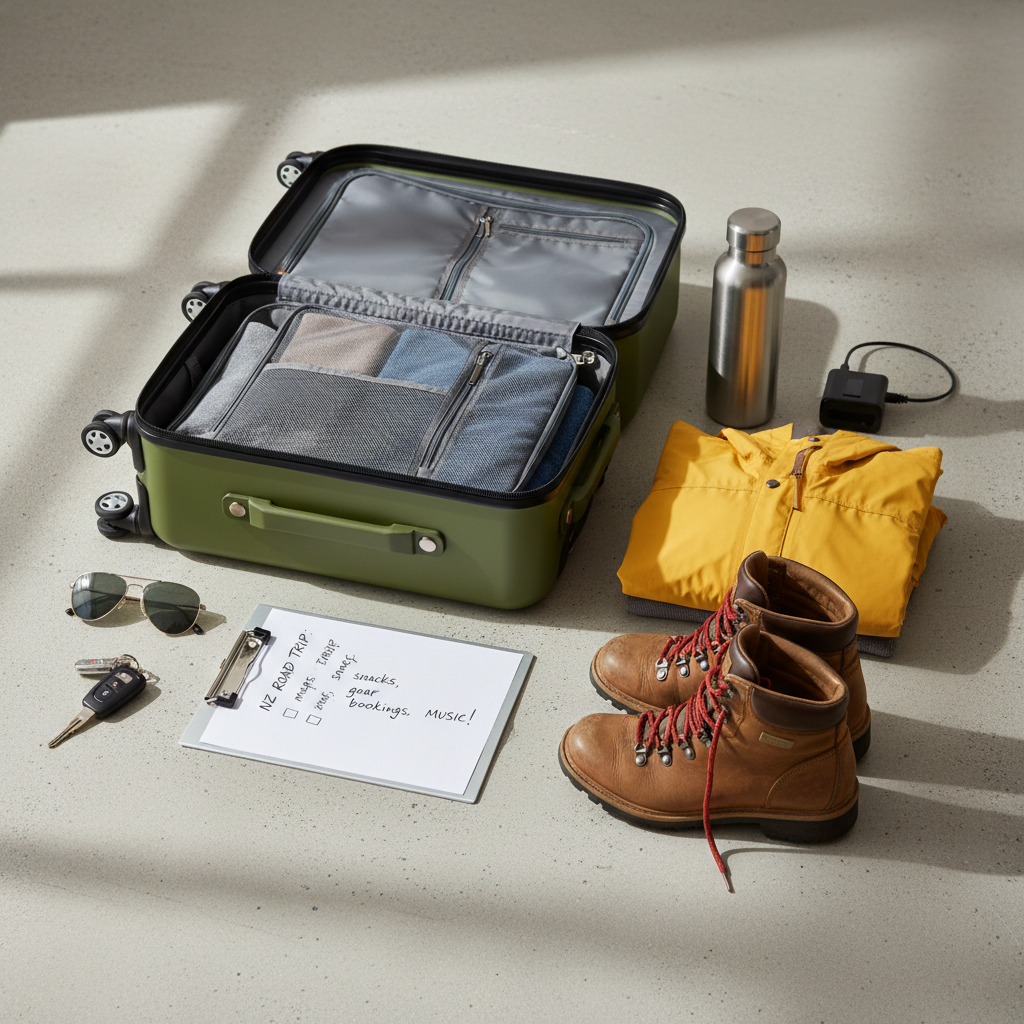
Practical Packing, SIMs, and Small Logistics That Save the Day
These details feel boring until you’re on the road, it’s raining sideways, and you’re missing one key item.
- Layers and rain gear: Even in warmer months, many regions feel cooler at night.
- Power and charging: Bring the right plug adapter, plus a car charger.
- Data plan: A local SIM or eSIM helps with navigation, but don’t count on coverage everywhere.
- Offline maps: Download routes before you lose signal in remote areas.
- Grocery rhythm: Stock up before long stretches, small towns can have limited hours.
Key takeaway: plan for friction, not perfection, the trip feels easier when you assume a few things will take longer.
Conclusion: A Plan You’ll Actually Enjoy Driving
If you’re still deciding how to plan a new zealand road trip, aim for fewer bases, shorter average drive days, and a small set of pre-booked “anchors” you’re genuinely excited about. That mix usually creates the best balance between structure and freedom.
Your next move can be simple: pick an island and a route template, then draft a day-by-day plan with check-in times and one main activity per day, after that, book the limited-capacity pieces and leave the rest open for weather and mood.