
Ferry travel island guide planning comes down to one thing: matching your sailing times to what you actually want to do on the island, so a “quick getaway” doesn’t turn into a long wait at the terminal.
If you’ve ever looked at a ferry schedule and thought, “That seems easy,” you’re not alone, and it usually is, until you factor in weekend crowds, vehicle lines, weather delays, and the simple truth that islands run on their own pace.
This guide focuses on short trips from the U.S. perspective, think day trips and 1–3 nights. You’ll get a practical way to choose routes, build an itinerary around sailings, and avoid common mistakes that burn half your trip.

Why short island trips feel harder than they should
On paper, ferries are simple transportation. In real life, short trips magnify small frictions, because you don’t have extra time to “fix it later.” A few patterns show up again and again.
- Schedules are the itinerary: the first and last sailing often decide whether you get a full day or just a half-day.
- Peak demand is predictable: Friday afternoons, weekend mornings, holiday returns, and summer Saturdays tend to be busy, and lines can surprise first-timers.
- Vehicles change the game: driving on can save time on the island, but it adds reservation complexity, check-in rules, and line strategy.
- Weather and sea state matter: cancellations are not daily, but they can happen, and wind or fog can slow operations.
According to the National Weather Service, marine forecasts can shift quickly, so checking conditions the day before and the morning of travel is a practical habit, even for “calm season” routes.
Quick self-check: what kind of ferry traveler are you?
Before you book anything, decide which profile sounds like you. This keeps your plan realistic and avoids over-optimizing the wrong thing.
Pick the closest match
- Walk-on explorer: you’ll use shuttles, bikes, or rideshare, and you want easy boarding and flexible plans.
- Car-based optimizer: you want the freedom to cover more ground, and you can handle earlier check-in and higher costs.
- Kid-and-gear traveler: strollers, coolers, beach chairs, or mobility needs, you care most about boarding ease and comfort.
- Weather-aware planner: you’re willing to adjust times and choose calmer crossings, even if it means a less “perfect” schedule.
If you’re not sure, default to walk-on for very short trips, and add a vehicle only when the island’s transit options are limited or your lodging sits far from the port.
Route and schedule strategy: choose sailings before you choose hotels
A ferry travel island guide is most useful when you treat sailings like flight segments, not like a city bus that shows up whenever. For short trips, you’re aiming for maximum usable hours on the island with minimal stress.
Scheduling rules that usually work
- Build around the first morning departure you can realistically make, including parking and terminal time.
- Avoid the absolute last return sailing unless you can comfortably handle a backup plan.
- Give yourself “terminal buffer”: for walk-on, you might need less; for vehicles, many operators require earlier arrival and line-up.
- Plan one “anchor activity” per day, not three, then add optional extras if time allows.
According to the U.S. Coast Guard, passenger safety relies on orderly boarding and compliance with crew instructions, so arriving unhurried is not just comfort, it reduces rushed decision-making around docks and vehicle lanes.
Packing and prep for a 1–3 day island trip
Short trips punish overpacking, but underpacking is also annoying when you pay island prices for basics. Keep it tight, and pack for the crossing, not only the destination.

Carry-on essentials (even if you bring a car)
- Reservation details (digital plus a screenshot in case service drops)
- Layers: wind on decks can feel colder than the forecast
- Water and a snack: terminals vary widely
- Portable charger: you’ll use your phone for timing, maps, and tickets
- Basic motion comfort: if you’re prone to nausea, consider medication or bands, and if you have health concerns, ask a clinician what’s appropriate
Vehicle travelers: two extra checks
- Know whether you can leave the car deck during the crossing, policies vary.
- Bring what you need onboard: you may not be able to return to the vehicle when underway.
Sample itineraries (day trip and weekend) that fit ferry reality
These templates are intentionally simple. You can personalize them, but the skeleton keeps your time anchored to sailings and reduces the “we’re late and now everything is rushed” spiral.
Day trip template (walk-on)
- Early sailing out: coffee near the terminal, board calm, grab a seat.
- Arrival + transit: go straight to one main area, don’t bounce across the island.
- Midday anchor: one big activity, beach, hike, museum, food crawl, guided tour.
- Return buffer: aim to be back near the dock 60–90 minutes before departure, adjust based on local conditions.
2–3 night template (car or walk-on)
- Day 1: travel + check-in + one easy win (sunset spot, casual dinner).
- Day 2: your “big day” with the longest drive or most walking.
- Day 3: slow morning + early return sailing to reduce stress.
Many islands have limited late-night dining, limited rideshare coverage, or quiet midweek schedules, so verifying hours before you arrive is worth five minutes.
Reservations, boarding, and the table you’ll actually use
Every operator differs, but the decision points are similar: do you need a reservation, how early do you arrive, and what happens if you miss your time. Check your carrier’s rules and keep a conservative plan for short trips.
Fast comparison for short trips
| Decision | Walk-on | With vehicle |
|---|---|---|
| Reservation need | Often optional or recommended in peak periods | Commonly required or strongly recommended |
| Arrival time | Usually shorter, but varies by terminal | Usually longer due to lane staging and loading order |
| Risk if late | May be shifted to next sailing if space allows | May forfeit space and wait for another slot |
| On-island mobility | Transit, bikes, taxis, tours | More freedom, more parking hassle |
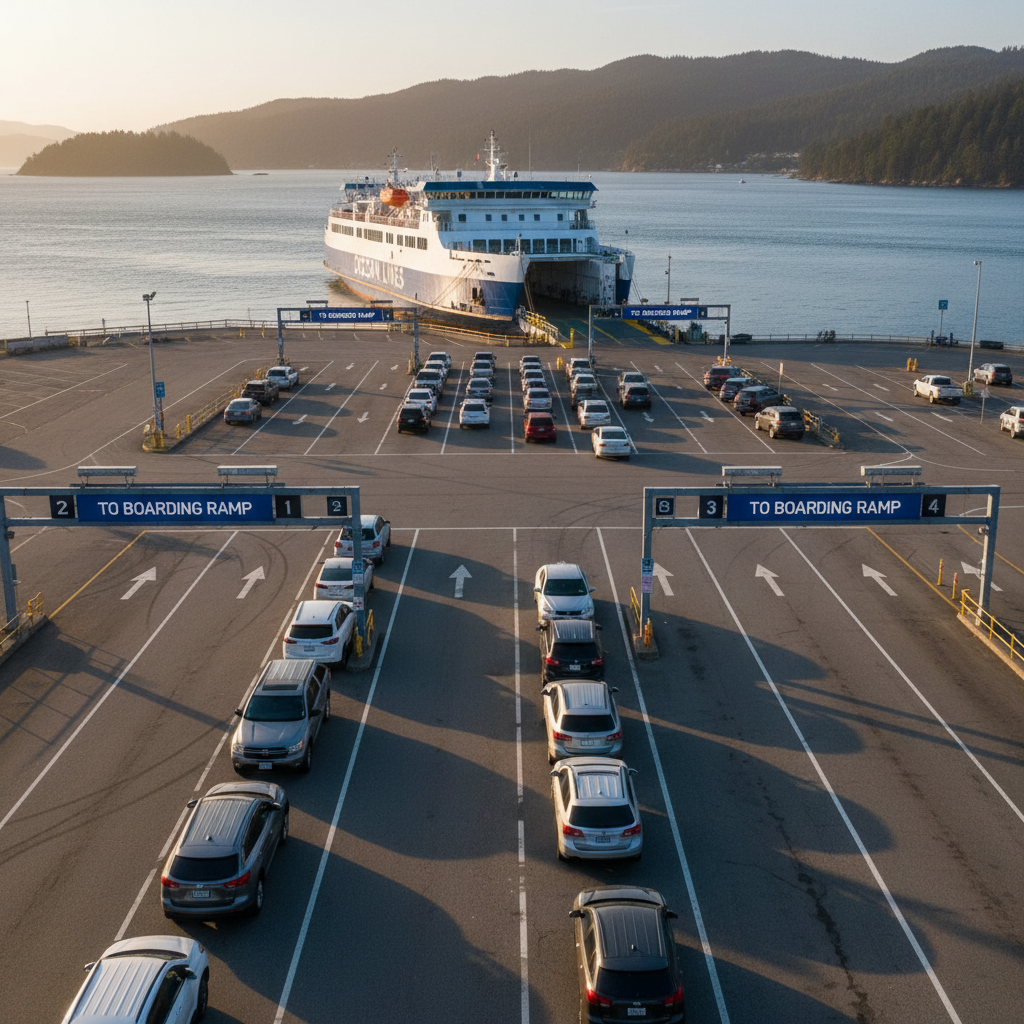
A practical boarding routine
- Confirm sailing time and terminal the night before, especially if there are multiple docks in the same city.
- Arrive earlier than you think on weekends, then treat the extra time as a coffee break, not a failure.
- Keep tickets and IDs accessible so you’re not unpacking bags in a line.
- Pick seats with your real priority: quiet, view, quick exit, or proximity to restrooms.
Common mistakes that quietly wreck short trips
Most problems are not dramatic, they’re slow leaks that drain hours. If your trip feels “tight,” these are the first things to correct.
- Overstuffed itinerary: you spend the day moving, not arriving.
- Assuming island transit works like a big city: fewer vehicles, fewer routes, longer waits.
- Ignoring return-day traffic: the drive to the terminal can be the bottleneck, not the ferry itself.
- Not planning food: popular spots can fill up early, and some close on specific weekdays.
- Skipping the plan B: if a sailing is canceled or full, do you stay longer, switch ports, or reroute?
According to the National Park Service, staying on marked trails and following local guidance reduces injury risk in coastal and island environments, so if hiking is your anchor activity, don’t treat it like a casual stroll without checking route conditions.
Key takeaways and a simple action plan
If you want a short trip to feel generous, protect time around your sailings, pack for comfort on the water, and plan one main goal per day. That’s the difference between “we did a lot” and “we were stressed the whole time.”
- Choose sailings first, then book lodging and activities around them.
- Walk-on works great for day trips and compact towns near the dock.
- Vehicles help when transit is sparse, but they add arrival rules and queue time.
- Build buffers on return day, especially on weekends.
Pick your island, pull up the schedule, and draft a “minimum viable itinerary” in 10 minutes. If it feels tight even on paper, it will feel tighter in real life.
FAQ
How far in advance should I book a short ferry trip?
For popular routes and summer weekends, earlier is usually safer, especially if you need a vehicle slot. For quieter seasons, you may have more flexibility, but checking policies helps because each operator handles capacity differently.
Is it better to bring a car or go as a walk-on passenger?
For short trips, walk-on is often less stressful when the dock connects to a town center and local transit is decent. Bringing a car can be worth it if your lodging or main sights sit far from the port, or if your group has lots of gear.
What happens if I miss my reserved ferry time?
It depends on the operator and how full sailings are. Many will try to place you on a later departure if space allows, but you should assume you could wait, especially with a vehicle, and plan buffers accordingly.
How early should I arrive at the ferry terminal?
Terminals vary a lot, and the difference between a calm boarding and a frantic one is usually arrival time. A conservative approach is to arrive earlier on weekends and holidays, then adjust once you learn your route’s rhythm.
Do ferries get canceled for weather, and what should I do?
Cancellations are not constant, but they can happen due to wind, fog, or sea conditions. Check marine forecasts, monitor operator alerts, and keep a fallback, such as returning earlier, staying an extra night, or changing travel windows.
Can I work on a ferry during the crossing?
Sometimes yes, sometimes it’s frustrating. Wi‑Fi and cell service can be inconsistent on water, so if you must work, download files ahead of time and treat connectivity as a bonus rather than a promise.
What should I do if I get motion sickness on ferries?
Choosing a seat near the middle of the vessel can feel steadier, and fresh air may help. If you use medication, it’s wise to follow label directions and, if you have medical conditions or take other meds, ask a clinician what’s appropriate.
Are there security or ID requirements like flying?
Most ferries feel more relaxed than airports, but rules vary by route and operator. Bring a government ID when you can, and read the carrier’s boarding instructions so you’re not surprised at the gate.
If you’re planning a quick getaway and want a ferry travel island guide tailored to your exact route, travel dates, and whether you’re driving on or walking on, it can help to share your departure port, group size, and must-do activity, then build a schedule that leaves breathing room.