
Self drive safari travel guide planning usually feels overwhelming because you’re juggling routes, park rules, vehicle choices, and safety all at once, and one wrong assumption can turn a dream trip into a stressful one.
The good news is that self-driving in Africa can be very doable when you pick the right country and season, build a realistic day-by-day plan, and prepare for the “small stuff” that matters on the road, fuel range, offline maps, border paperwork, and what to do when plans change.
This guide focuses on practical decisions Americans tend to get stuck on: where self-drive is most approachable, what kind of vehicle you actually need, how to keep costs predictable, and the habits that reduce risk without sucking the fun out of the trip.
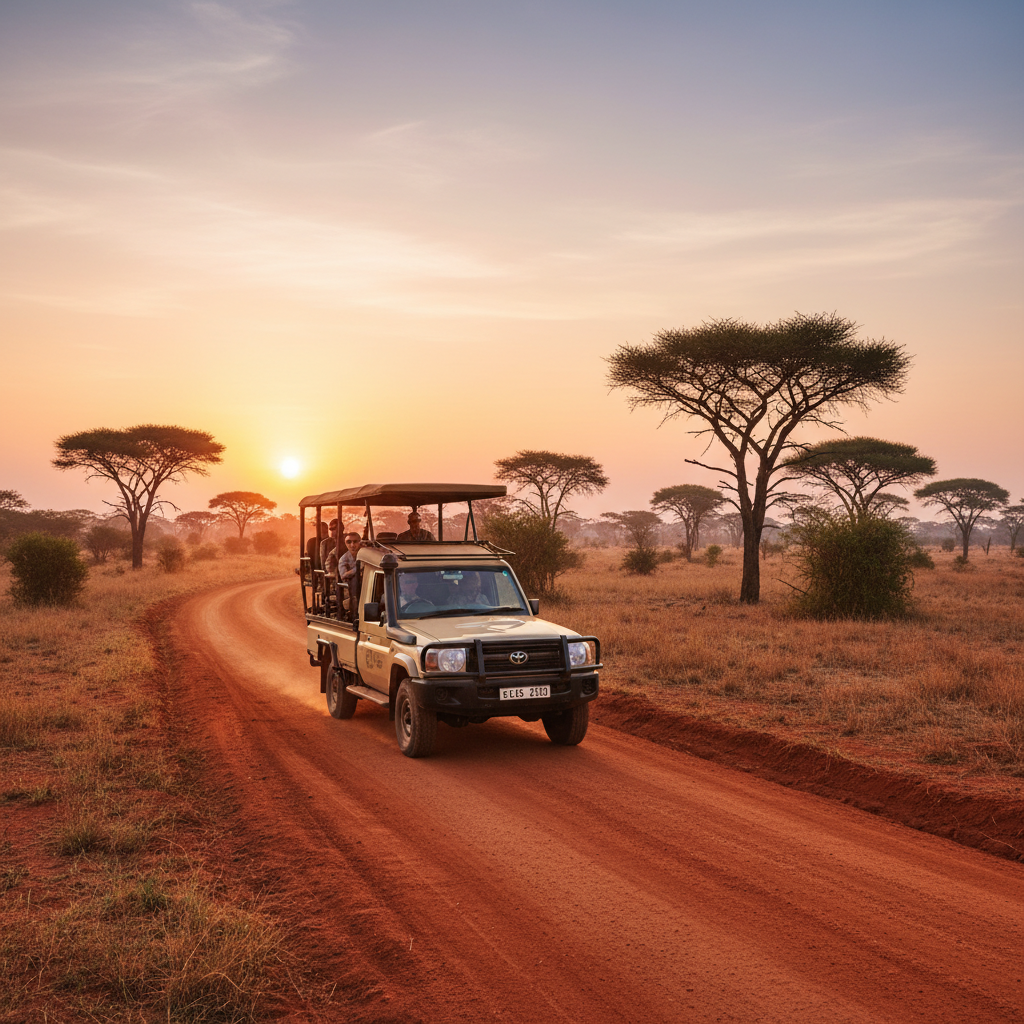
Where self-drive works best (and where it gets tricky)
The easiest self-drive safaris are usually in places with solid road networks, clear park logistics, and a mature rental market. In many cases, that means Southern Africa first, East Africa second, and remote regions only after you’ve built confidence.
- Often most beginner-friendly: South Africa (Kruger), Namibia (Etosha), Botswana (some areas, depending on season and route).
- Can work, but planning is less forgiving: Kenya and Tanzania if you’re staying on main routes, avoiding aggressive timelines, and confirming park rules carefully.
- Usually not ideal for a first self-drive: very remote parks with deep sand, river crossings, limited fuel, or sparse support infrastructure.
Reality check: “self-drive” can still include help. Many travelers mix independent driving with a few guided game drives in tougher parks, it can be a smart compromise rather than a failure of nerve.
Key point: choose the destination based on your comfort with long drives, navigation, and uncertainty, not just on bucket-list animals.
Build a route that matches how safaris actually feel
A common mistake is treating safari days like a road trip with wildlife sprinkled in. Animals don’t run on a schedule, and parks often reward slow mornings, long pauses, and repeating the same loop road twice.
Route planning rules that keep stress low
- Drive fewer miles than you think: park roads are slower, stops are constant, and “just 90 miles” can eat most of a day.
- Use a hub-and-spoke plan: base near a gate or inside the park, then explore in loops rather than bouncing lodges nightly.
- Plan for gates and check-in windows: many parks enforce opening/closing times and have rules about where you can drive.
- Schedule one buffer day every 4–6 days: weather, road conditions, and wildlife sightings can reshape the plan.
According to U.S. National Park Service guidance on wildlife viewing, giving animals space and avoiding disruption is a core safety practice; the same mindset applies on safari, patience and distance lead to better encounters and fewer problems.
Vehicle choices: what you need vs what looks adventurous
The right vehicle depends less on “Africa” and more on the exact parks, month, and road types. A sedan can be fine in some places, while other routes genuinely call for higher clearance and 4x4.
Quick vehicle fit guide
- 2WD sedan or small SUV: often works on paved routes and well-graded park roads in dry season, but watch clearance.
- High-clearance 2WD SUV: a sweet spot for many first-timers, comfortable, simpler than full 4x4.
- 4x4 with low range: more relevant for deep sand, mud, and certain remote tracks; also adds cost and complexity.
Ask the rental company very specific questions: tire type, spare count, jack quality, whether a compressor is included, and what insurance excludes. That last part is where people get surprised.
Cost and capability comparison (typical patterns)
| Option | Best for | Trade-offs |
|---|---|---|
| 2WD sedan | Kruger-style paved + easy gravel loops | Low clearance, less forgiving on rough patches |
| High-clearance SUV | Mixed gravel roads, comfort on long drives | Higher fuel cost, still not “go anywhere” |
| 4x4 | Sand, mud, remote tracks, wet season routes | More expensive, more to manage, training helps |
Safety and park etiquette that actually matter on the road
Most safety advice sounds dramatic, but the day-to-day reality is calmer: you’re managing speed, spacing, decision-making around wildlife, and basic personal security in transit towns.
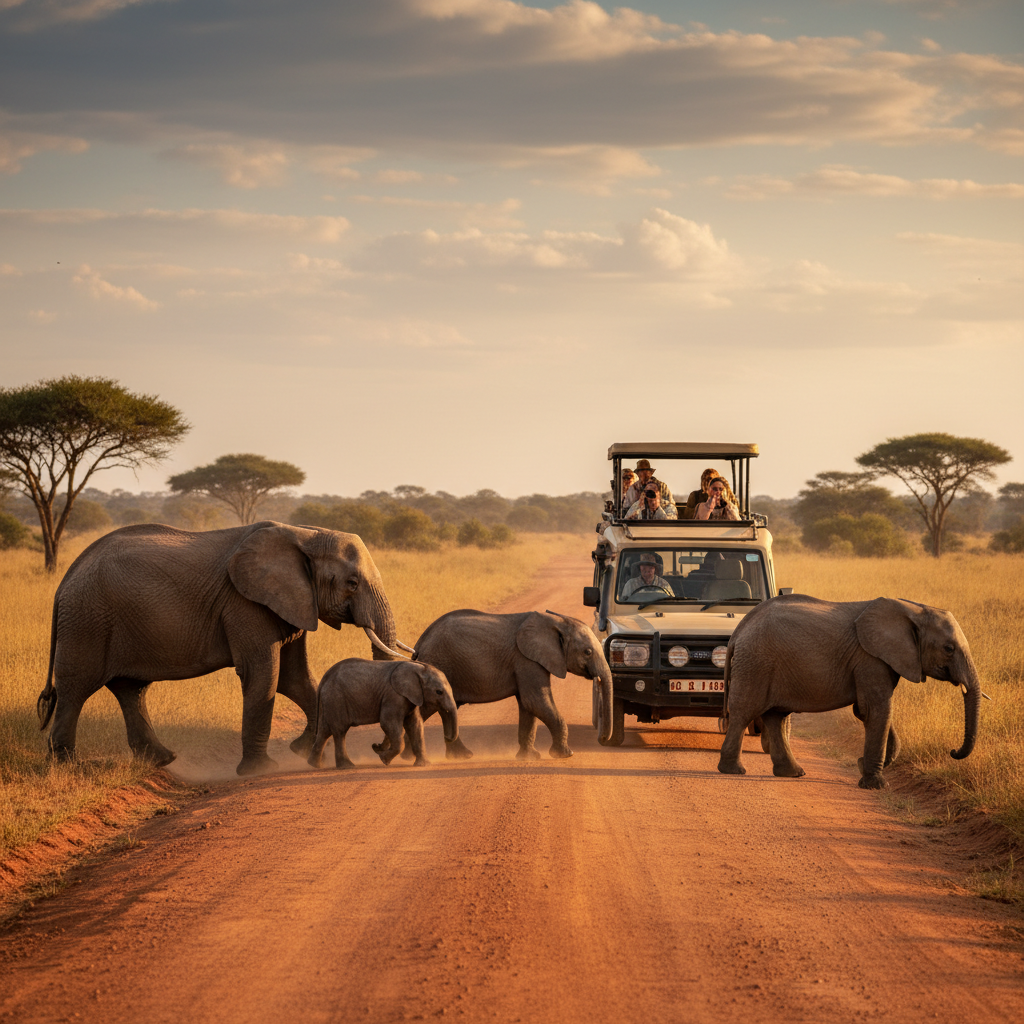
- Drive slow, especially near sightings: sudden stops cause collisions, dust, and wildlife stress.
- Stay in the vehicle unless a park sign explicitly allows exiting: even “small” animals can be unpredictable.
- Keep distance and don’t crowd: if a sighting feels tense, it usually is, back up and wait.
- Don’t drive at night in parks: many parks prohibit it, and visibility risks jump fast.
- In towns, use normal travel caution: lock doors, don’t leave gear visible, choose well-reviewed fuel stops.
According to CDC travel guidance, preparing for destination-specific health risks and discussing vaccines or malaria prevention with a clinician can be appropriate; for many safari itineraries, this is worth doing early because timing matters.
Packing and prep: the short checklist that saves trips
This is where a self drive safari travel guide earns its keep: small items prevent big headaches. You’re not trying to pack “everything,” you’re trying to pack the things you can’t easily replace at a park gate.
Core essentials (beyond normal travel gear)
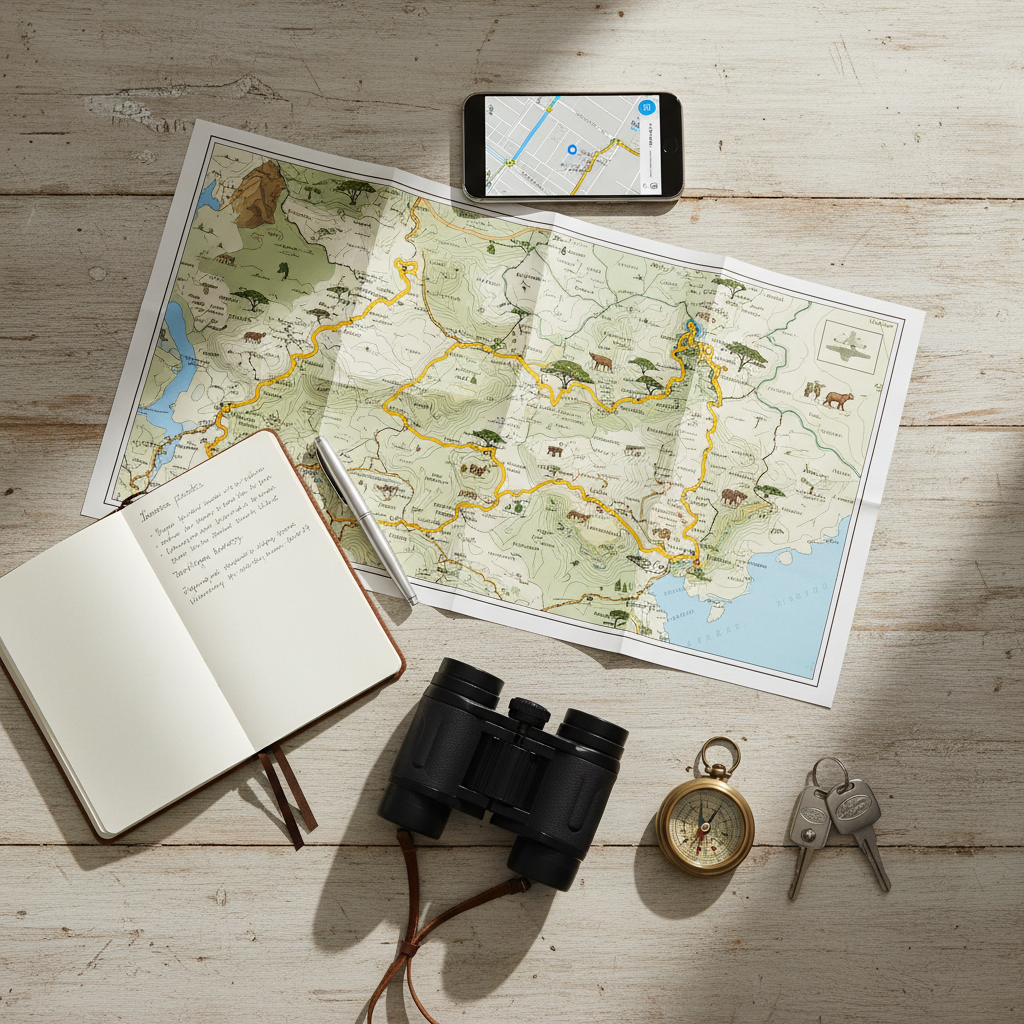
- Offline navigation: downloaded maps plus a paper map backup.
- Power and charging: car charger, power bank, and any plug adapters you need.
- Water and snacks: especially for long transit days between towns.
- Basic tire support: gauge, compressor if provided, and knowing where the spare lives.
- Binoculars: more valuable than a longer camera lens for most people.
- Documents: printed rental agreement, insurance details, park bookings, and emergency numbers.
Key takeaways (pin this before you book)
- Pick one or two parks and go deeper rather than racing across borders.
- Match the vehicle to routes and season, not the toughest YouTube trail you’ve seen.
- Plan slower days, wildlife watching rewards patience more than mileage.
- Build redundancy for maps, power, and communications.
Practical itinerary templates and a “am I ready?” self-test
If you want a realistic plan, start with a template, then adjust for your flight times and driving comfort. Many Americans underestimate jet lag and overestimate how much they’ll want to drive on day one.
Simple, proven itinerary shapes
- 7–9 days, one main park: base near/inside the park, add one scenic region for variety.
- 10–14 days, two parks: one “easy logistics” park plus one more remote or different habitat.
- Split-style: self-drive for transit and landscapes, guided drives for the most technical areas.
Self-test: you’ll likely do fine if most answers are “yes”
- Can you drive 2–4 hours calmly, then still feel patient enough for slow game-viewing?
- Are you comfortable navigating without cell service for stretches?
- Will you follow park rules even when other cars bend them?
- Can you accept that some days you may see “less,” and that’s still part of the trip?
If several are “no,” it may be smarter to start with a hybrid plan, it still delivers a strong safari while reducing friction.
When to get professional help (and what to delegate)
Needing help is normal, especially for border crossings, remote routes, or peak-season lodging where availability becomes the real constraint.
- Consider a travel advisor or local operator if you’re crossing multiple countries, traveling in wet season, or attempting remote tracks.
- Delegate bookings with hard rules, park permits, restricted camps, and vehicle requirements are where mistakes cost real money.
- Ask for a safety brief if you’re new to 4x4 techniques; a short orientation can prevent avoidable damage.
According to U.S. Department of State travel advisories, entry requirements and security conditions can change; checking guidance close to departure and considering travel insurance terms is a sensible step.
Conclusion: a calmer way to plan your first self-drive safari
A self drive safari travel guide is most useful when it pushes you toward fewer, better decisions: a destination with predictable logistics, a route that leaves breathing room, and a vehicle that matches the road rather than your ego.
If you want an easy next step, pick one park, choose travel dates based on season and your budget, then price two vehicle options and compare them against your exact route, not a generic checklist. That single exercise clarifies most of the trip.
FAQ
Is a self drive safari in Africa safe for Americans?
In many popular parks and routes, it can be reasonably safe when you follow park rules, drive defensively, and avoid pushing into remote areas without preparation. Conditions vary by country and region, so it’s worth checking current government travel advice and asking your rental provider what they see week to week.
Do I need a 4x4 for a self-drive safari?
Not always. In dry season and in parks with good road maintenance, a high-clearance SUV can be enough. If your itinerary includes deep sand, mud, or remote tracks, 4x4 becomes more relevant, and learning basic recovery skills helps.
What’s the best country for a first self-drive safari?
Many travelers start with South Africa or Namibia because logistics tend to be more straightforward. That said, “best” depends on your comfort with long drives, your wildlife goals, and whether you prefer paved access or more rugged terrain.
How do I handle navigation with limited cell service?
Download offline maps before you enter parks, carry a paper map backup, and save key waypoints like gates, camps, and fuel stops. If you rely on a single app without a fallback, you’ll feel the stress the moment signal drops.
How many days do I need for a self-drive safari?
For most first-timers, 7–10 days with one main park feels more satisfying than a rushed multi-country sprint. More time helps, but only if you’re not spending half of it in transit.
What are common mistakes on a self-drive safari?
Overpacking the route, underestimating driving times on park roads, skipping insurance fine print, and planning every day like a checklist. Safaris reward flexibility, and your plan should leave room for it.
Should I book camps inside the park or stay outside?
Inside-park stays can reduce daily commuting and make dawn/dusk viewing easier, but they may cost more and book out earlier. Staying outside often saves money and adds dining options, but you’ll be tied to gate hours.
Do I need vaccines or malaria pills for safari travel?
It depends on your destinations and season. Because recommendations vary, it’s smart to review CDC guidance and discuss your specific itinerary with a travel medicine clinician, especially if you’ll visit malaria-risk areas.