
Temple travel etiquette guide questions usually show up right before you step through the gate and realize you might be underdressed, too loud, or holding your camera at the worst possible moment.
That discomfort is common, especially for U.S. travelers who didn’t grow up around temples, shrines, or monastery culture. The rules can feel “unwritten,” and they vary by country, faith, even by neighborhood.
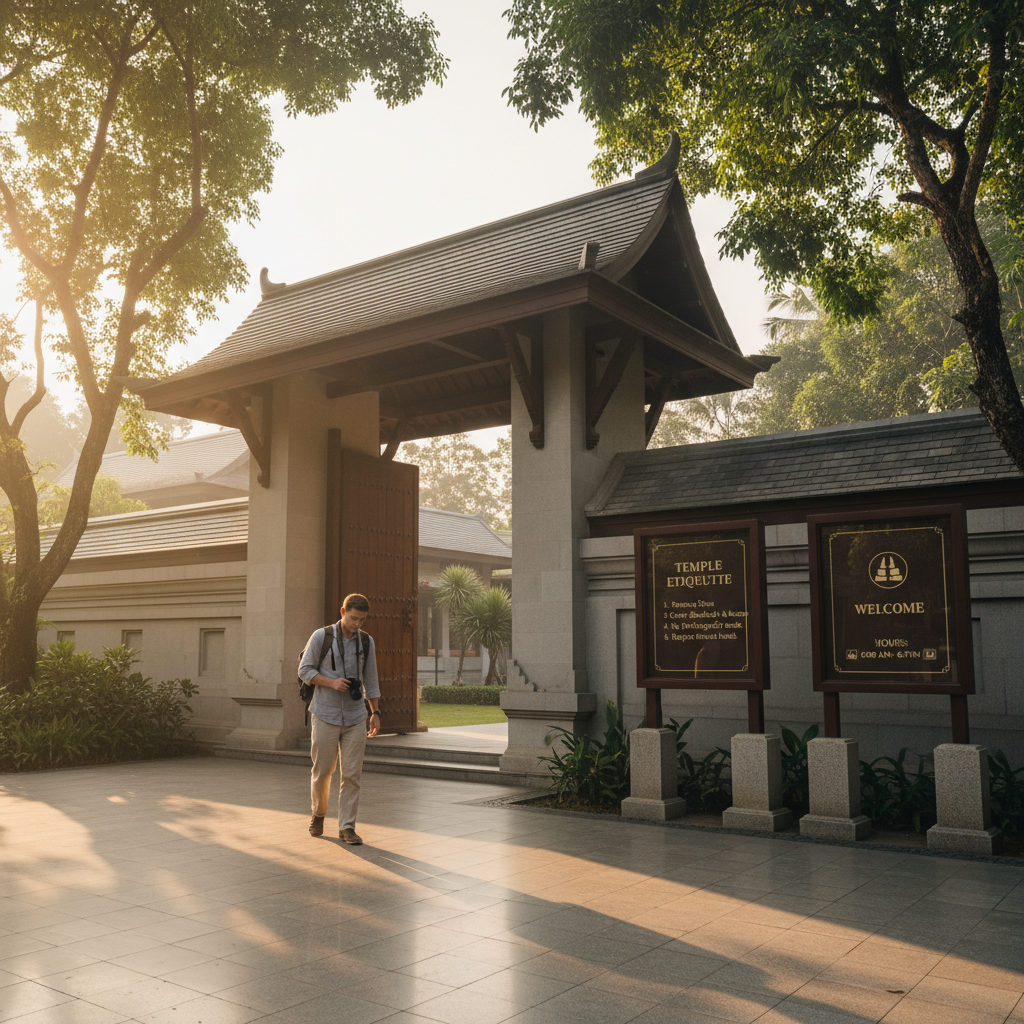
This guide stays practical: what to wear, how to behave, what to do with shoes and photos, and how to read the room without overthinking. You’ll also get quick checklists and a small table you can screenshot before your visit.
What “Temple Etiquette” Really Means (and Why It Varies)
In many places, a temple isn’t a tourist attraction first, it’s an active space for worship, mourning, celebration, and community life. Etiquette is less about perfection and more about not pulling attention away from what others came to do.
Expect differences based on religion and local custom. A Buddhist temple in Thailand, a Hindu temple in India, and a Shinto shrine in Japan can share themes like modesty and quiet, but the details change fast.
According to UNESCO, places of cultural and religious heritage benefit when visitors follow site-specific guidance and respect local communities, which is a nice way of saying “your behavior matters more than your selfie.”
Common Missteps U.S. Travelers Make (No Shame, Just Fixable)
Most awkward moments come from assumptions: “It’s basically like a museum,” or “If nobody stopped me, it must be fine.” In reality, many staff and worshippers avoid confrontation, even when something feels disrespectful.
- Clothing that’s fine at a resort but reads as careless in a sacred space: tank tops, short shorts, sheer fabrics.
- Talking volume that feels normal in a busy city but feels loud in a prayer hall.
- Camera-first behavior, like stepping in front of people who are praying or blocking walkways for photos.
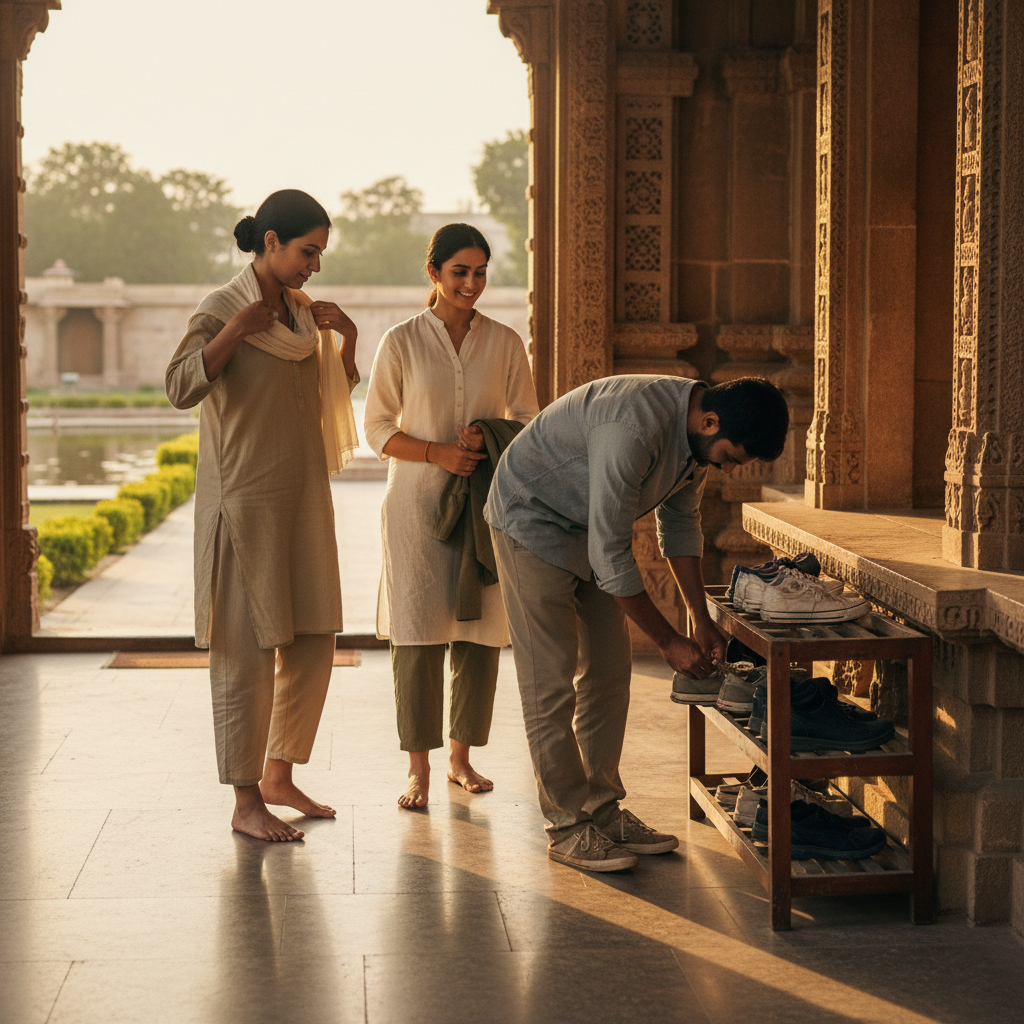
- Missing shoe cues, especially when you’re moving between indoor and outdoor areas.
- Unclear “where to stand” moments, like approaching altars, offerings, or ritual objects.
If you remember one thing from any temple travel etiquette guide, make it this: follow posted signs, then follow what respectful locals do, and keep your presence “small.”
Quick Self-Check Before You Enter (60 Seconds)
Use this as your “am I about to be that person?” filter. If you answer “no” to more than one, pause and adjust before crossing the threshold.
- My shoulders and thighs are covered, or I have a layer/sarong ready.
- I can remove shoes quickly, and I’m wearing socks if that helps me feel comfortable.
- My phone is on silent, not just vibrate, and my camera sounds are off if possible.
- I know whether photos are allowed, and where they’re restricted.
- I’m not eating, chewing gum, or carrying an open drink inside.
- I’m ready to speak softly and move without rushing.
Dress, Shoes, and Body Language: The Basics That Work Most Places
What to wear (safe default)
When you’re unsure, choose modest and simple. You don’t need to look formal, you just want to avoid looking casual in a way that reads dismissive.
- Tops: cover shoulders and chest, avoid transparent fabric.
- Bottoms: aim for knee-length or longer, avoid very tight fits when possible.
- Bring a layer: a light scarf or overshirt solves a lot of surprise dress rules.
Shoes: watch for thresholds and cues
Many temples treat indoor floors as clean space. If you see shoe racks, piles of shoes, or people carrying footwear, that’s your answer even without a sign.
- Slip-on shoes make entry smoother.
- Place shoes neatly where others do, not in the middle of the walkway.
- If you’re worried about theft, keep valuables with you, but don’t bring bulky bags inside if signs discourage them.
Body language (small details, big impact)
- Don’t point feet toward altars or people praying if seating is on the floor, adjust your posture.
- Give worshippers space, even if you’re “just passing through.”
- When in doubt, stand to the side and observe for a moment.
Photography, Phones, and Social Media Without Being Disruptive
Photos are where good intentions go sideways. It’s not that pictures are always banned, it’s that your timing and positioning can turn someone’s private moment into your content.
- Look for signs about no-photo areas, flash restrictions, and ceremony rules.
- Skip flash by default. Bright bursts can disrupt prayer and damage certain artworks over time.
- Avoid filming people praying up close. If you want atmosphere, shoot wide, from the edge.
- Keep conversations about “the shot” outside, not in the main hall.
According to the U.S. Department of State, travelers should be mindful of local laws and customs, which includes restrictions around religious sites and photography in certain countries. If a guard or volunteer asks you to stop, treat it as a final answer, not a negotiation.
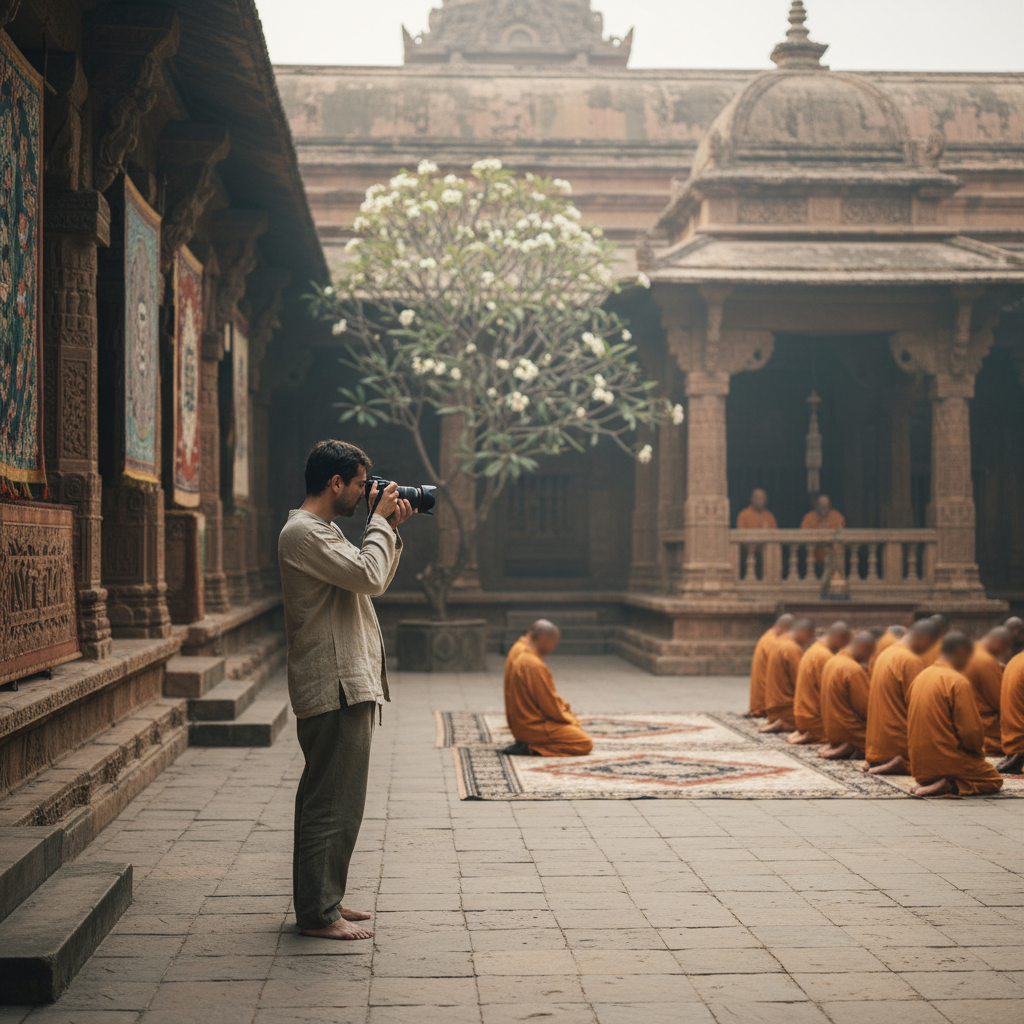
If you’re building a travel album or posting online, a useful mental rule is “no faces without clear permission,” especially for children, monks, nuns, and anyone engaged in worship.
Offerings, Donations, and Participation: What’s Okay (and What’s Touchy)
Many temples welcome visitors warmly, and some invite participation. The tricky part is that participation can look different from what U.S. travelers expect, you might be welcome to observe but not to touch.
- Donations: if you donate, use boxes provided and give what feels comfortable. Avoid making a show of it.
- Offerings: flowers, incense, candles often have a specific place and method, watch others or ask quietly.
- Relics and sacred objects: don’t touch unless signs or staff explicitly allow it.
- Ritual areas: if there’s a line, join it calmly, if there’s no line, don’t assume it’s open access.
For health and safety, incense smoke can bother people with asthma or sensitivities. If you’re unsure, participating lightly or skipping incense is typically acceptable, and if you have medical concerns, it’s smart to consult a clinician before travel.
Temple Etiquette Cheat Sheet (Screenshot-Friendly)
This table won’t cover every tradition, but it helps you make fast, low-risk choices. It’s the practical core of a temple travel etiquette guide when you’re tired, jet-lagged, and trying to do the right thing.
| Situation | Best default | Why it works |
|---|---|---|
| Unsure about dress rules | Cover shoulders and knees, add a scarf | Modesty standards are common across many temples |
| No sign about shoes | Look for shoe racks and follow locals | Local practice usually reflects the real rule |
| Want to take photos | Ask or look for signage, avoid flash | Prevents disruption and respects privacy |
| Ceremony in progress | Stand back, stay quiet, don’t cross in front | Minimizes interference with worship |
| Not sure where to walk | Use side paths, avoid the central area | Central spaces are often processional or sacred |
When You Should Ask Staff or Seek Local Guidance
There are moments when guessing creates more risk than simply asking. If you can’t find signage, a short, respectful question is often appreciated.
- You’re entering an inner sanctuary, altar area, or elevated platform.
- Someone is selling tickets, blessings, or “required” items in a way that feels pushy.
- You’re visiting during a festival, funeral rite, or high-attendance holy day.
- You have accessibility needs and need a nonstandard route.
If you feel pressured into paying for something you didn’t request, step aside and check official signs or ask at the main office. Scams can happen around tourist-heavy religious sites, and staying calm helps you avoid escalating a misunderstanding.
Key Takeaways You Can Use Immediately
- Dress modestly by default, bring one light layer so you can adapt fast.
- Let worshippers set the tone, your job is not to be noticed.
- Photography is about context, avoid flash, avoid close-ups, obey posted rules.
- Observe for 30 seconds before acting, it prevents most mistakes.
Conclusion: Respect Beats Perfection
A good temple travel etiquette guide doesn’t make you anxious, it gives you a simple goal: act in a way that keeps the space peaceful for the people who rely on it. If you dress modestly, move quietly, and treat signs and staff guidance as non-negotiable, you’ll usually be fine.
Before your next visit, pack a light scarf and set your phone to silent. Then, once you arrive, take a short pause at the entrance and copy the calmest person in the room, it works more often than any memorized rulebook.
FAQ
What should I wear to a temple if I’m traveling in hot weather?
Lightweight long layers help, think breathable fabrics, loose pants or a midi skirt, and a sleeved top. If you’re unsure, carry a scarf or overshirt so you can adjust without stress.
Do I always need to remove my shoes in a temple?
No, but it’s common in many regions. If you see shoe racks, people in socks, or a clear threshold where shoes stop, follow that cue even if you didn’t spot a sign.
Is it disrespectful to visit a temple as a non-religious tourist?
Usually not, many temples welcome visitors. The line is behavior: treat it as a living place of worship, not a backdrop, and avoid interrupting ceremonies or prayer.
Can I take photos inside temples?
Sometimes yes, sometimes no, and rules can change by room. Look for posted guidance and be conservative with flash, angles, and proximity to worshippers, when in doubt, ask.
How do I behave during a ceremony if I accidentally arrive at the busy time?
Stand back, keep your voice down, and don’t cross directly in front of the main ritual area. If seating is expected and you’re unsure, staying at the edge and observing quietly is a safe choice.
Are donations required to enter?
Many sites suggest a donation, others have a ticket system, especially at famous landmarks. If someone demands payment in an unofficial way, step aside and check the main entrance signage or office.
What if I make a mistake, like stepping somewhere I shouldn’t?
Correct it quickly without making a scene, a small apology and moving away is usually enough. Staff often care more about your response than the slip itself.
If you’re planning a multi-temple itinerary and want a simpler way to stay respectful across different countries, keep a small “temple kit” in your day bag: a light scarf, socks, hand sanitizer, and a reminder note with your quick etiquette checklist.