
Neck pillow travel comfort comes down to one thing: keeping your head from tipping into awkward angles when you finally try to rest on a plane, train, or road trip. If you wake up with a stiff neck, a sore jaw, or that “my shoulder feels stuck” sensation, it’s usually not because you “slept wrong” so much as because your support was wrong.
Long travel days are a perfect storm, limited space, unpredictable seat angles, noise, dehydration, and the fact that most seats aren’t designed for real sleep. A good neck pillow won’t fix every factor, but it can reduce strain on the cervical spine and take pressure off the muscles that end up doing all the work.
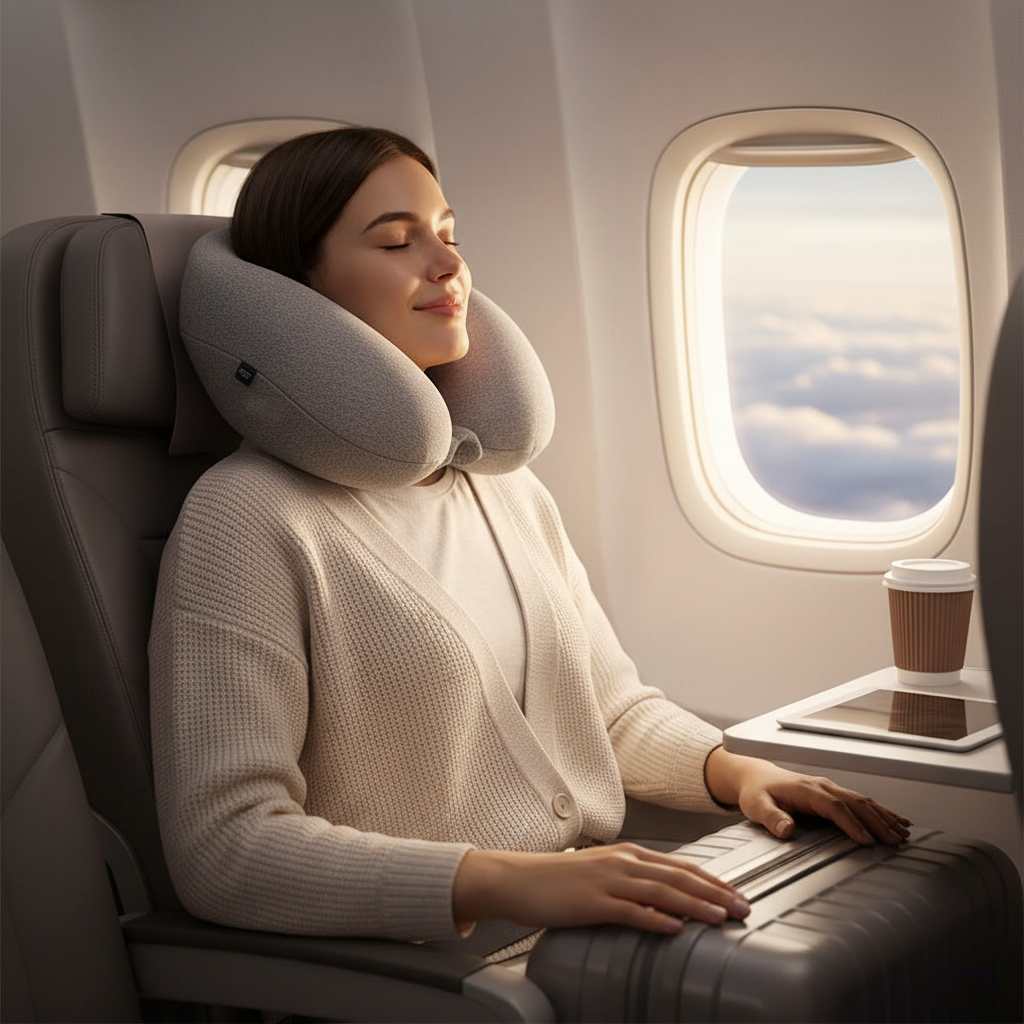
This guide focuses on what actually matters when you’re buying and using a travel neck pillow, how to tell if you chose the wrong one, and a few setup tricks that make even a mediocre pillow perform better.
Why long trips make your neck hurt (and what a pillow can realistically do)
Most travel neck pain is about unsupported weight. Your head weighs roughly as much as a bowling ball, and when you doze off, your neck muscles stop actively “holding” it in neutral alignment.
- Side-bending: your head drifts toward one shoulder, common in aisle seats or when you lean away from a window.
- Forward flexion: chin drops toward chest, common when the pillow is too low or too soft.
- Rotation: head turns and stays turned, which can irritate joints and tighten one side of the neck.
What a neck pillow can do well is limit extreme movement and keep you closer to neutral. What it usually can’t do is create perfect posture in a cramped seat, so think “damage control,” not magic.
According to the Centers for Disease Control and Prevention (CDC)... long-distance travel can increase discomfort and stiffness for many people, and changing position plus gentle movement can help. That same idea applies here: support helps, but so do micro-adjustments and breaks when you can.
A quick self-check: are you using the wrong neck pillow?
If you’re not sure whether it’s the pillow or “just travel,” run through this list. Two or more “yes” answers usually means your setup needs a change.
- You wake up and your chin is on your chest or you feel a pulling sensation at the base of the skull.
- The pillow forces your head forward, even when you’re awake and trying to sit comfortably.
- Your ears end up uneven, one shoulder feels high, or you keep re-tightening the pillow.
- You get numbness or tingling down an arm (not just mild stiffness).
- The pillow feels fine at home but fails in your seat because it doesn’t match the headrest shape.
That last point is sneaky, airline and car headrests can be angled or curved in ways that fight your pillow. Sometimes the fix is less about a new purchase and more about positioning.
Choosing the right style: U-shape, wrap, inflatable, or collar
There isn’t one “best” travel pillow because bodies and seats vary. Here’s how the common styles behave in the real world.
| Type | What it’s good for | Common downside | Who usually likes it |
|---|---|---|---|
| Classic U-shape (memory foam) | Soft side support, easy to use | Often pushes head forward if worn the “usual” way | People who lean toward the window |
| Wrap / scarf-style | Adjustable support, can secure chin | Can feel warm or restrictive | Light sleepers who move a lot |
| Inflatable | Packs small, firmness adjustable | Can feel bouncy, may squeak, pressure points | Minimal packers, backup pillow users |
| Cervical collar-style | Strong chin/neck stabilization | Looks bulky, some people dislike the feel | Travelers who need more structured support |
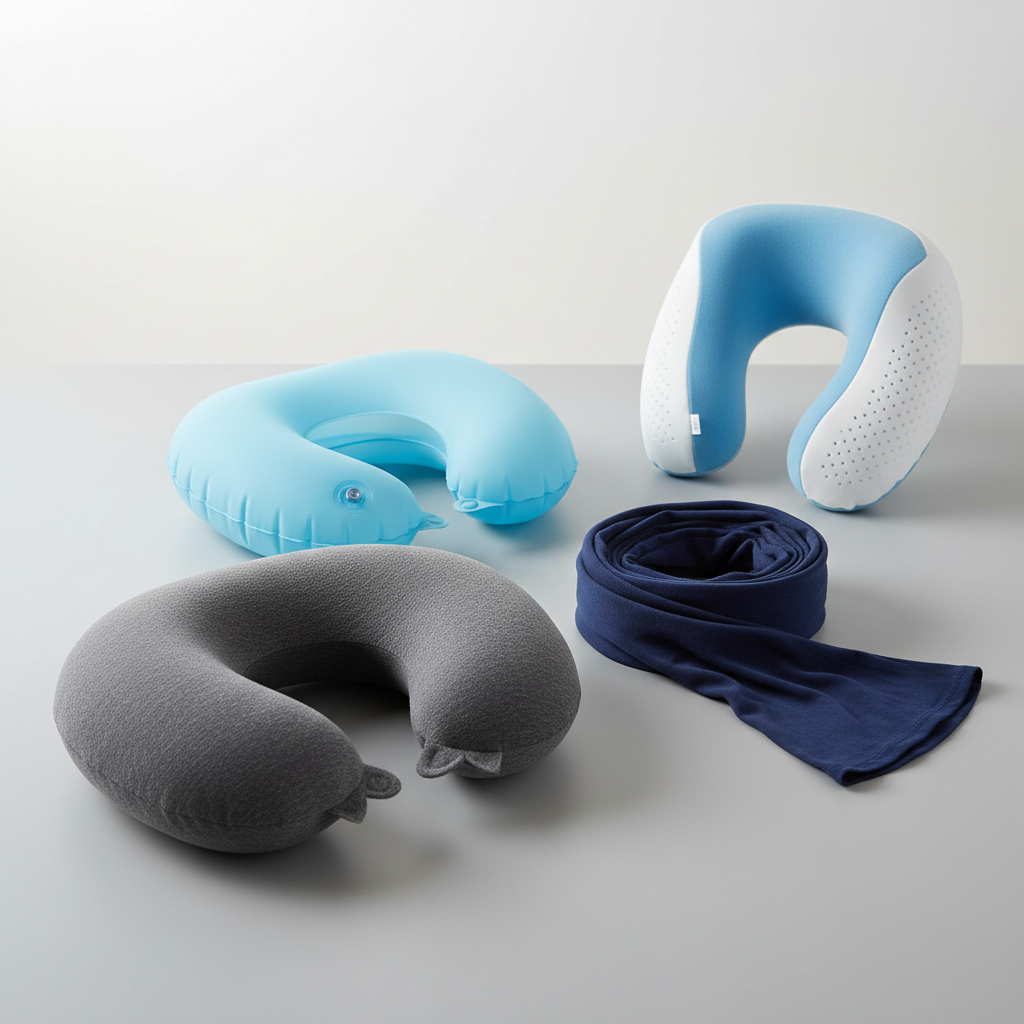
One practical tip, if you tend to drop your chin, prioritize a design that offers front support or can be tightened enough to resist that forward fall.
Fit matters more than price: how to size and position it
Most complaints about neck pillows come from fit, not quality. The goal is to fill the space between your neck and the “empty air” that appears when you relax.
Three fit cues that usually work
- Height: the pillow should meet the jawline or just below it without forcing your chin up.
- Snugness: it should stay in place when you exhale and relax your shoulders, but not feel like a clamp.
- Back-of-head clearance: if your headrest already pushes your head forward, use a slimmer pillow behind the neck.
A counterintuitive trick that helps many people: try wearing a classic U-shaped pillow backwards so the thicker part supports the front/sides instead of pushing from behind. It’s not “the correct way” per packaging, but real seats don’t care what the label says.
Long-trip setup: small adjustments that improve neck pillow travel comfort
Neck pillow travel comfort improves a lot when you treat it as part of a system, seat angle, lumbar support, foot position, and even where your elbows land.
- Recline a little if allowed. Even a small recline reduces the forward-drop tendency.
- Support your lower back with a folded hoodie or small lumbar roll, it keeps the upper body from slumping.
- Anchor your arms on armrests or a jacket in your lap so shoulders don’t creep upward.
- Window seat hack: add a thin layer (scarf or hoodie) between pillow and window to reduce vibration and cold spots.
- Car passenger tip: avoid twisting toward the window for long stretches, rotate your torso slightly instead.
According to the Federal Aviation Administration (FAA)... staying aware of safety guidance, including seat belt use while seated, matters even when trying to rest. Keep support setups compatible with buckling up comfortably.
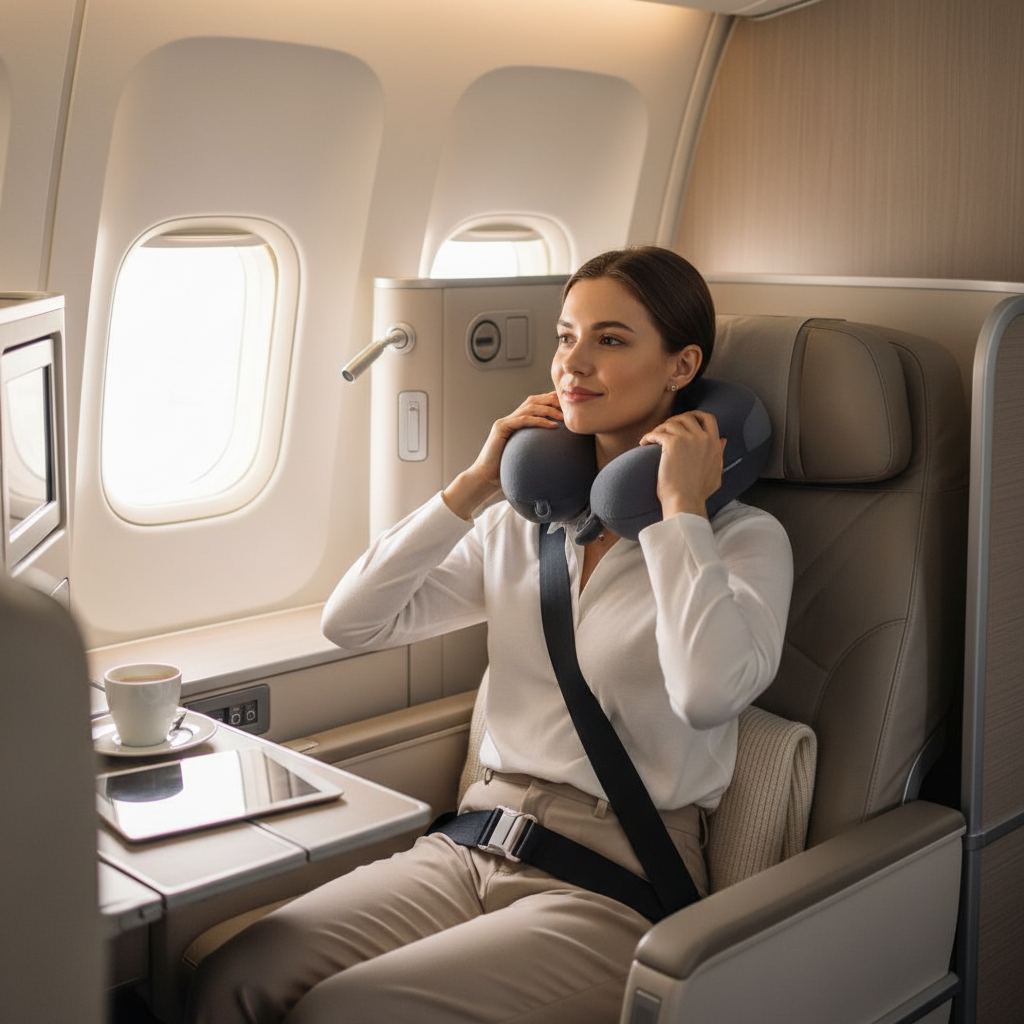
If you tend to overheat, choose a breathable cover or keep a thin cloth layer between skin and pillow. Being too warm makes you toss around, and movement defeats the whole purpose.
Materials and features that are worth caring about
Features get marketed loudly, but only a few tend to change the experience on long trips.
- Firmness you can tolerate: too soft collapses, too firm creates pressure points. If in doubt, medium firmness usually works for more people.
- Washable cover: travel grime is real, and a removable cover keeps the pillow usable.
- Adjustability: toggles, straps, or modular inserts help you match different seats.
- Packability: if it’s too annoying to carry, you’ll stop bringing it, even if it’s great.
Memory foam often feels “luxury,” but it can trap heat. Inflatable models solve the bulk problem, yet some travelers dislike the springy feel. If you already know you’re picky about texture, it’s smart to test at home during a movie night, not on hour six of a red-eye.
Common mistakes that make a good pillow feel bad
These are the usual culprits when someone says “neck pillows don’t work for me,” even though the product is fine.
- Wearing it too loose, your head still falls, you just fall slower.
- Using it as a headrest, most travel pillows are neck supports, not a replacement for a seat headrest.
- Ignoring seat geometry, a forward-angled headrest plus a thick pillow equals forced neck flexion.
- Chasing perfect stillness, small posture shifts every so often can be healthier than locking in.
If you’re prone to headaches, jaw tension, or neck issues, aggressive support can sometimes make symptoms worse. In those cases, it’s reasonable to be conservative and adjust gradually.
When it’s time to get professional advice
Travel soreness is common, but a few signs suggest you should talk with a clinician, especially if symptoms persist after the trip.
- Pain that radiates into the arm, numbness, or tingling
- Weakness in the hand or grip
- History of neck injury, surgery, or known disc issues
- Headaches that feel new, severe, or tied to neck movement
A physical therapist or other qualified professional can recommend support strategies tailored to your anatomy. If you’re unsure, err on the cautious side, travel can aggravate underlying issues that weren’t obvious day to day.
Key takeaways + a simple plan for your next trip
If you want better rest without overthinking it, focus on fit and setup more than gimmicks. Buy a pillow style that matches how you drift off, test it at home, then bring one or two small “support extras” like a scarf for micro-adjustments.
- Pick the style based on your drift pattern: chin-drop needs front support, side-lean needs side fill.
- Dial in the seat: slight recline, lumbar support, arms anchored.
- Reposition occasionally instead of locking into one angle for hours.
Do that, and neck pillow travel comfort stops being a coin flip and starts feeling repeatable, even when the seat isn’t great.
FAQ
How do I stop my head from falling forward when I sleep sitting up?
Look for a pillow that provides front support or can tighten under the chin area. Many people also do better by flipping a U-shaped pillow around so the thicker section supports the front/sides instead of pushing the head forward.
Is memory foam or inflatable better for long flights?
Memory foam often feels more stable, while inflatable models win on pack size and adjustable firmness. If you run hot or travel with a tight bag, inflatable can be practical; if you hate “bounce,” foam may feel more natural.
Why does a neck pillow make my neck hurt more?
Usually it’s too tall, too thick behind the neck, or too firm, which can force your head into an angle your joints don’t like. Try reducing bulk behind the neck, loosening slightly, or changing the orientation before giving up on the pillow.
What’s the best way to use a neck pillow in a window seat?
Use the window as a stable side support, but add a thin layer like a scarf between your pillow and the wall to reduce vibration and cold. Keep your shoulders down and avoid shrugging toward the window for long stretches.
Can a neck pillow help with snoring on planes?
It might help indirectly if it reduces chin-drop, since posture can affect airflow. Snoring has many causes though, so consider it a “maybe,” not a guaranteed fix.
How tight should a travel neck pillow be?
Snug enough that your head doesn’t slide off when you relax, but loose enough that swallowing and breathing feel normal. If you feel pressure on the throat or jaw, back off and adjust.
How do I clean a travel neck pillow after a trip?
Follow the label instructions, and prioritize pillows with a removable, washable cover. Foam inserts often shouldn’t go in a washer, but covers usually can, and that’s what picks up most oils and odors.
If you’re trying to make long flights or road trips less punishing, start by identifying how you collapse when you sleep, then choose a pillow style that counters that specific pattern, it’s the fastest route to a noticeable upgrade without buying three different options.