
Ferry trip essentials come down to two things: staying comfortable onboard and staying flexible when schedules, weather, or terminals get unpredictable.
If you only pack like it’s a short ride, you usually feel it later, a dead phone, no layers when the deck turns windy, or you realize the “quick snack” line is the longest line on the boat. A ferry is travel, even when it’s not a flight.
This guide covers what to bring, how to plan around terminals and delays, what changes if you’re traveling with kids or a car, and a few small items that quietly save the day.
What usually goes wrong on a ferry trip (and why packing matters)
Most ferry problems aren’t dramatic, they’re small frictions that stack up. You can avoid a lot of them with a realistic view of what ferry travel feels like in the U.S., especially on popular routes and peak weekends.
- Wind and temperature swings: decks feel colder than you expect, cabins can feel warm, you end up chasing comfort all ride.
- Spotty signal: coverage may drop mid-route, downloads and offline access matter more than people think.
- Longer-than-posted timing: boarding, vehicle loading, and docking can stretch the day, and delays happen.
- Limited outlets and seating: “I’ll just charge onboard” is a common plan that doesn’t always work.
- Food lines: many ferries offer snacks, but lines and selection vary by operator and sailing time.
According to the U.S. Coast Guard, passengers should follow crew instructions and posted safety information onboard. That sounds basic, but it’s the reason you want your essentials easy to access, not buried under luggage.
A quick self-check: what kind of ferry trip are you taking?
Before you decide what to carry, nail down the trip type. It changes what counts as “essential,” especially if you’ll be outside on deck or dealing with vehicle staging lines.
Use this checklist
- Duration: under 45 minutes, 1–2 hours, or 3+ hours
- Seating style: assigned vs first-come, indoor-only vs open deck access
- Travel mode: walk-on vs vehicle, bike, pet, stroller, mobility device
- Weather exposure: will you want deck time for views or photos?
- Connectivity needs: do you need to work, navigate on arrival, or entertain kids?
- Arrival plan: rideshare, transit, or driving away immediately
If you’re not sure, assume two things: you may wait longer than expected, and you’ll want at least one layer plus backup power.
Ferry trip essentials: a practical packing list that fits in one bag
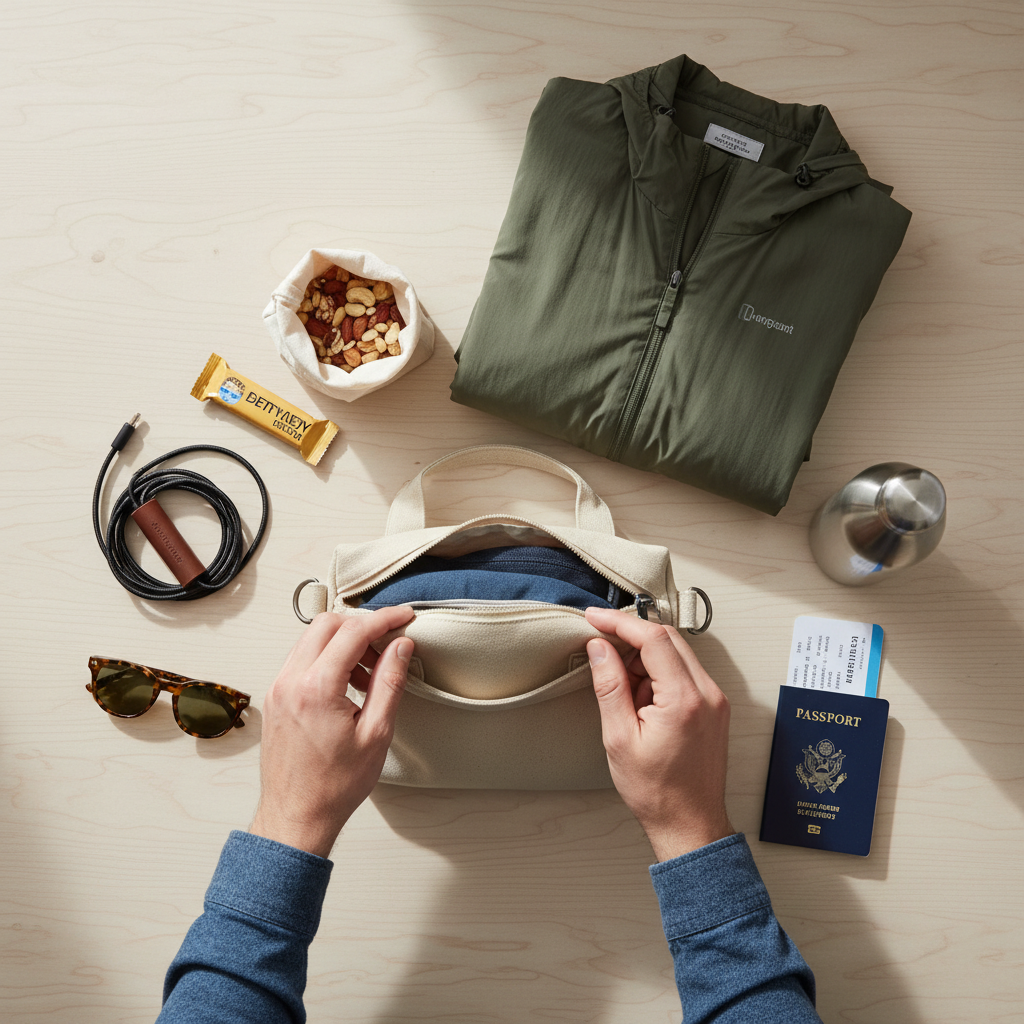
Ferry trip essentials work best when they stay compact, easy to grab, and not dependent on onboard services. Think “day bag,” not “suitcase.”
Must-haves (for almost every route)
- Tickets + ID: even with mobile tickets, keep a screenshot or email access offline when possible.
- Phone + power bank: bring a cable that actually fits your device, and charge before you arrive.
- Layers: a light jacket or windbreaker, and a thin extra layer if you run cold.
- Water: refillable bottle, terminals vary on fountains and refill stations.
- Snacks: especially for kids or anyone who gets cranky when meals shift.
- Basic meds: any prescriptions you need that day, plus simple OTC items you commonly use.
Comfort add-ons that people rarely regret
- Sunglasses and sunscreen: glare off water can be intense even on cool days.
- Earbuds: for announcements, podcasts, and cutting engine noise in some cabins.
- Hand wipes or sanitizer: useful for tables, railings, and snack situations.
- Small cash or card backup: payment options onboard vary by operator.
If you’re bringing luggage
- Keep a “top pocket” kit: ticket/ID, power, meds, water, and one layer should stay accessible.
- Tag your bag: it’s easy to grab the wrong black duffel when everyone disembarks at once.
Safety and sea-sickness prep (without overthinking it)
Not everyone gets motion sick, and many routes feel stable. Still, if you’re prone to nausea, it’s worth planning for it because the fix is easier before symptoms start.
- Choose your seat: mid-ship and lower decks often feel steadier than the very front or upper deck.
- Eat lightly: a small snack beats an empty stomach for many people, but greasy meals can backfire.
- Fresh air helps: stepping outside can reduce that “stuck” feeling, weather allowing.
- Medication: if you use motion-sickness meds, follow the label and consider asking a pharmacist if you’re unsure.
According to the Centers for Disease Control and Prevention (CDC), motion sickness can be reduced by focusing on the horizon and avoiding reading when you feel symptoms. If you have medical conditions, are pregnant, or take other medications, it’s smart to consult a clinician before using motion-sickness drugs.
For general onboard safety, don’t ignore the boring stuff, listen for announcements, keep kids close on deck, and avoid leaning over railings for photos.
Terminal and boarding strategy: the part that saves the most stress
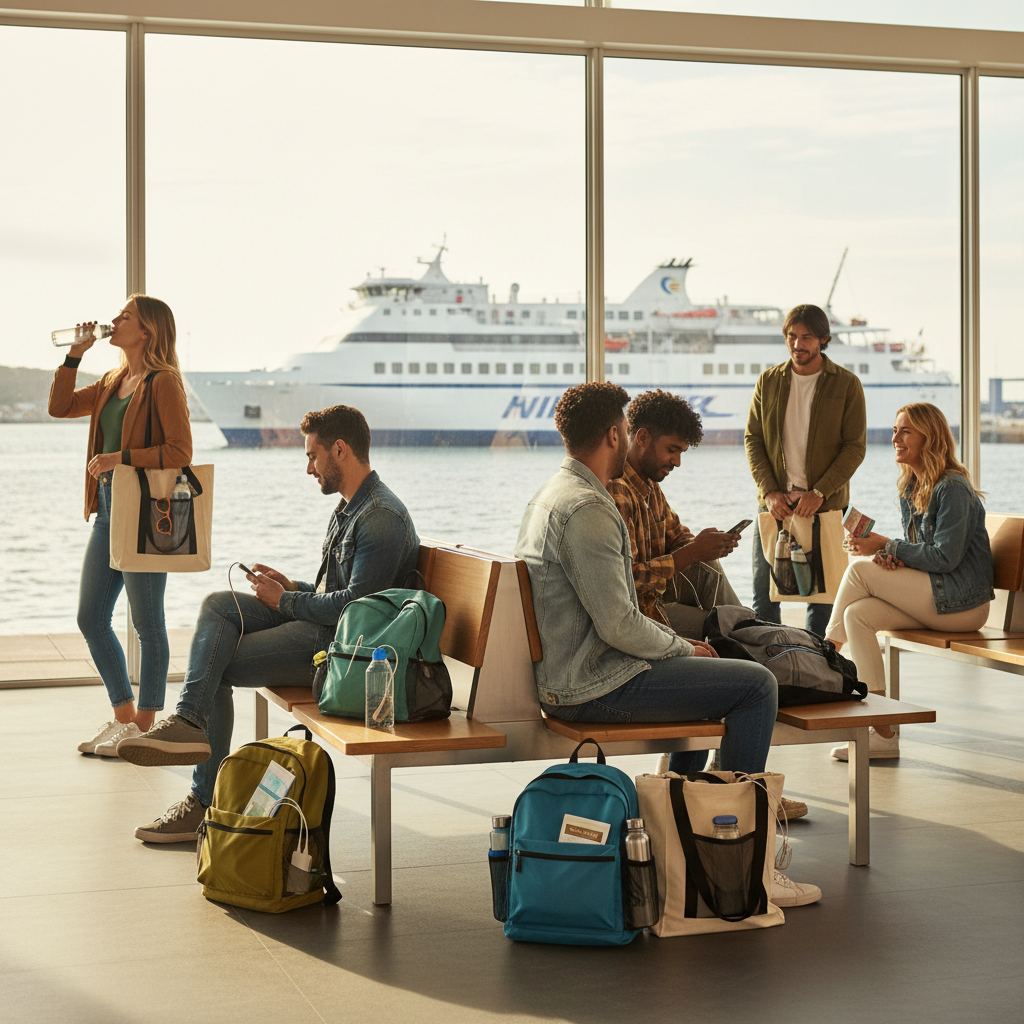
This is where people lose time, not on the water. A few habits make ferry days feel smoother, especially when you’re juggling a car line, bikes, or a tight connection.
Before you arrive
- Confirm the sailing and check alerts: operators post service advisories, and weather can shift plans.
- Download what you need: maps, tickets, playlists, kids’ shows, anything you’d hate to buffer mid-route.
- Plan parking: some terminals fill fast, and overflow lots can add an unexpected walk.
At the terminal
- Arrive with buffer time: how much depends on operator rules and whether you drive onboard, but “barely on time” often becomes “missed it.”
- Bathroom first: lines onboard can be longer than you expect right after boarding.
- Board with a purpose: if you want deck views, claim a spot early, if you need quiet, find a corner away from the café.
Special scenarios: kids, pets, vehicles, and commuters
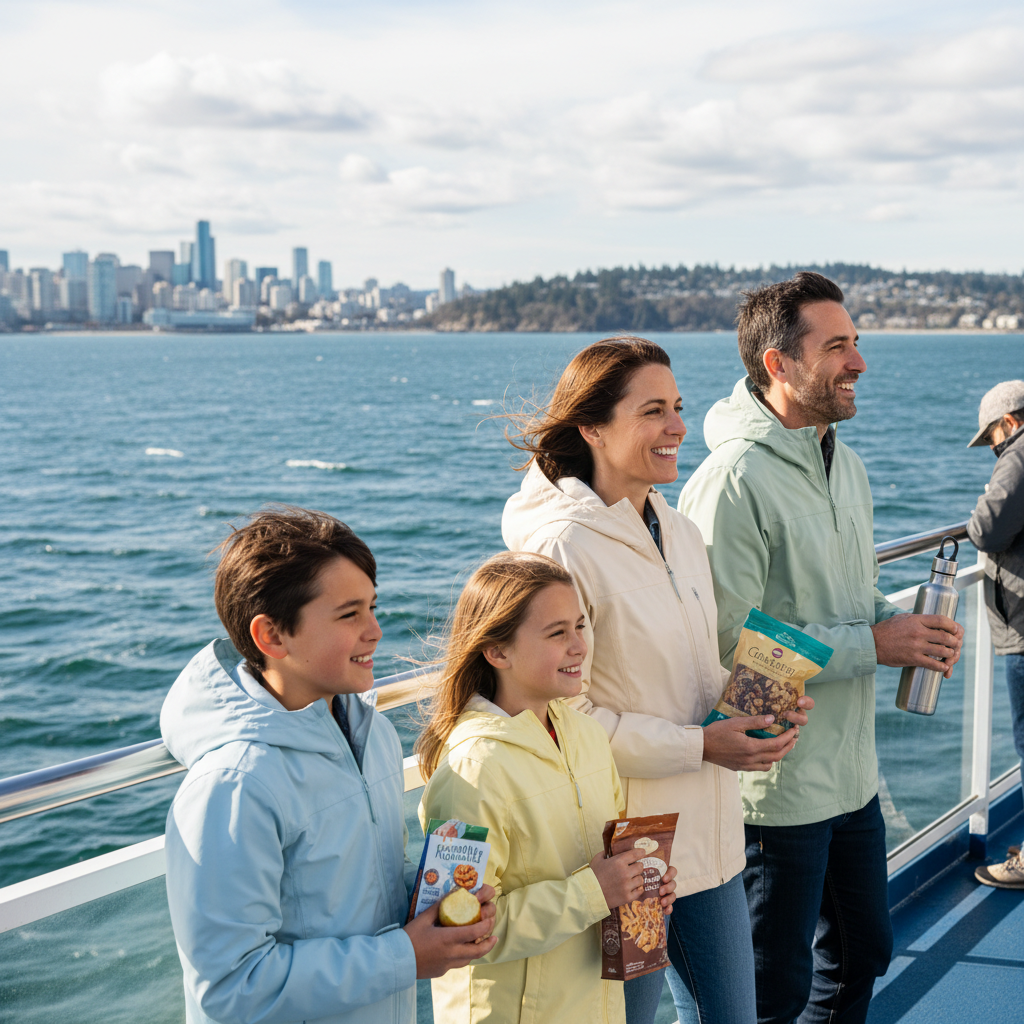
Your essentials change a lot when you’re managing someone else’s comfort, or when you can’t easily return to the car during the ride.
Traveling with kids
- One “calm-down” activity: sticker book, small toy, or downloaded show with headphones.
- Spill-proof snacks: simple, not messy, and something you know they’ll actually eat.
- Extra layer: kids get cold on deck quickly, and then everything turns into a negotiation.
Bringing a pet
- Check operator rules: some allow pets only in designated areas or require carriers.
- Water and waste bags: don’t assume you’ll find them when you need them.
- Noise sensitivity: engine sounds and crowds can stress some pets, a quiet spot matters.
Driving onboard
- Pack a walk-on style bag: you may not access your vehicle during the crossing.
- Photo of your deck/row: sounds silly, helps when you return to the car in a hurry.
- Secure items: keep valuables with you, don’t leave visible gear in the cabin.
Commuters and day-trippers
- Work kit: power bank, hotspot plan if you rely on connectivity, and an offline to-do list.
- Clothes strategy: one versatile layer beats bulky outerwear you’ll carry all day.
Quick reference table: essentials by trip length
If you want a fast answer, this table covers what usually matters most by duration, it’s not exhaustive, but it’s a solid baseline for U.S. ferry routes.
| Trip length | Core essentials | Smart add-ons |
|---|---|---|
| Under 45 minutes | Ticket/ID, phone, light layer | Water, earbuds |
| 1–2 hours | Power bank, snacks, water, windbreaker | Sunscreen, motion-sickness prep |
| 3+ hours | Extra layer, offline entertainment, basic meds | Neck pillow, eye mask, reusable utensils |
Common mistakes (and what I’d do instead)
People don’t usually forget the big stuff, they forget the small stuff that makes the day feel long. These are the patterns that show up again and again.
- Relying on onboard Wi‑Fi: treat it as a bonus, download what you need before you arrive.
- Wearing the wrong shoes: slippery decks happen, and terminals can involve more walking than expected.
- Bringing a heavy bag: one well-organized bag beats three “just in case” totes.
- Ignoring sun and wind: the water amplifies both, pack for exposure even on mild days.
- Not planning for delays: have a snack and a battery buffer so delays stay annoying, not catastrophic.
Key takeaways: pack layers, bring backup power, keep essentials accessible, and assume terminals take longer than the crossing.
Practical step-by-step: your 15-minute pre-boarding routine
If you want a repeatable system, this is the quick routine that covers most ferry days without turning packing into a project.
- Check sailing status and terminal instructions, then screenshot tickets.
- Charge up and toss a power bank plus the right cable into your top pocket.
- Build one “comfort layer” you can add or remove fast.
- Pack water and a snack you’ll be happy to eat even if you’re stressed.
- Do a pocket check: ID, wallet, keys, sunglasses, meds.
That’s basically it. Most ferry trips go fine, it’s the unplanned moments where ferry trip essentials earn their keep.
Conclusion: travel light, but don’t travel unprepared
A ferry ride can be one of the easiest ways to travel, great views, less hassle than flying, and a calmer pace. The trick is respecting the “in-between” parts, the terminal, the weather on deck, the little delays that pop up.
Pick one bag, pack for temperature swings, keep power and tickets accessible, and give yourself a time buffer. If you do that, most routes feel simple, even on busy days.