
how to sleep better on a plane comes down to a few controllable moves: setting up your seat like a “sleep space,” timing food and caffeine, and reducing light and noise so your brain actually switches off.
If you’ve ever landed feeling like you fought the seatbelt all night, you’re not alone, plane cabins combine dry air, cramped posture, and constant interruptions, and even people who sleep fine at home can struggle mid-flight.
This guide focuses on what tends to work in real cabins, economy, premium economy, and business. No miracle hacks, just practical steps you can try on your next trip, plus a quick checklist to match tactics to your flight time and seat.
Pick the right sleep strategy for your flight length and timing
Before you buy gadgets or pop a pill, decide what “good sleep” means for this specific flight. A 2-hour hop needs a different plan than a 10-hour overnight, and an early-morning landing changes the goal again.
- Short flight (under 4 hours): aim for a nap, not deep sleep. Your win is reduced fatigue, not perfect rest.
- Medium flight (4–7 hours): plan a 90–180 minute block (one to two sleep cycles) to avoid waking groggy.
- Long-haul (8+ hours): protect a longer block, then allow a lighter second nap if you wake early.
According to CDC, adjusting your sleep schedule and light exposure can help with jet lag management, which matters because chasing sleep at the wrong time often backfires on arrival.
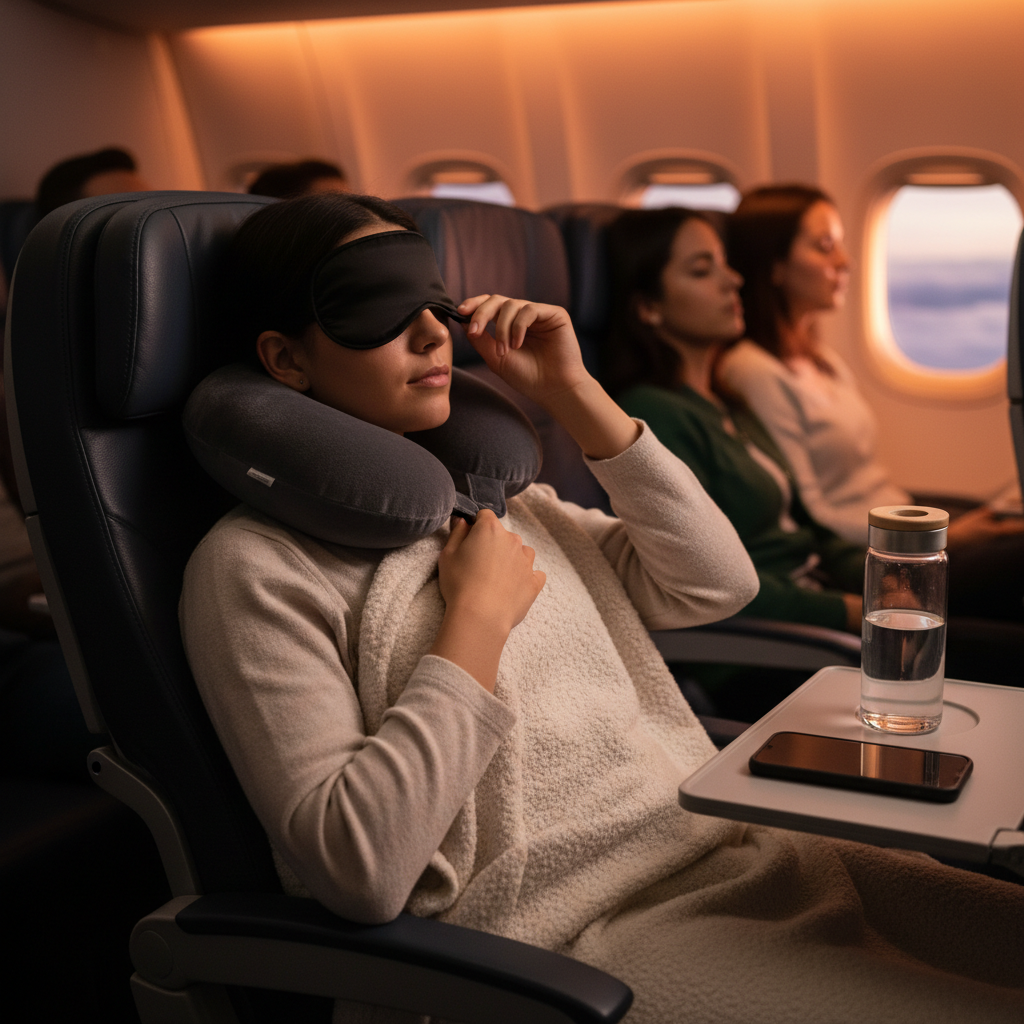
Set up your seat so your body stops fighting the chair
The uncomfortable truth: most “can’t sleep on planes” problems start as posture problems. If your neck and lower back keep searching for support, your brain stays on alert.
Do this right after takeoff (or once you’re allowed)
- Seatbelt over your blanket: you’re less likely to get woken up for a belt check.
- Recline early, then adjust: find the smallest recline that stops you sliding forward.
- Support your lower back: a rolled hoodie, scarf, or small travel pillow can reduce that “hammock” curve.
- Feet stable: if your feet dangle, your hips tilt. Use a bag as a footrest (when safe and allowed) or a foot hammock if you already own one.
Neck support: choose based on your sleep position
- If you sleep upright: a firmer U-shaped pillow that keeps your chin from dropping tends to help.
- If you lean to one side: a wrap-style pillow or a window-side pillow can reduce “head bob.”
- If you’re in a lie-flat seat: skip bulky neck pillows, focus on lumbar support and a small pillow to keep your head neutral.
One small detail people miss: if your headphones or earplugs push your head forward, you’ll tense your neck all night. Adjust your pillow around them, not against them.
Control light, noise, and temperature (the cabin trifecta)
If you want to know how to sleep better on a plane without overthinking it, start here. Light tells your brain it’s daytime, noise triggers micro-wakeups, and temperature swings keep you fidgeting.
- Eye mask: pick one that blocks light without pressing your eyelids. Even “dim” cabins often have aisle glare.
- Earplugs + optional headphones: earplugs cut the sharp sounds, headphones can cover the low rumble with music or white noise.
- Layering beats one thick item: cabin temps vary by row. A base layer plus a hoodie or light jacket is usually easier to tune.
According to FAA guidance on cabin safety, keeping your area clear and following crew instructions matters, so avoid setups that block aisles or interfere with seatbelts and tray tables when required.
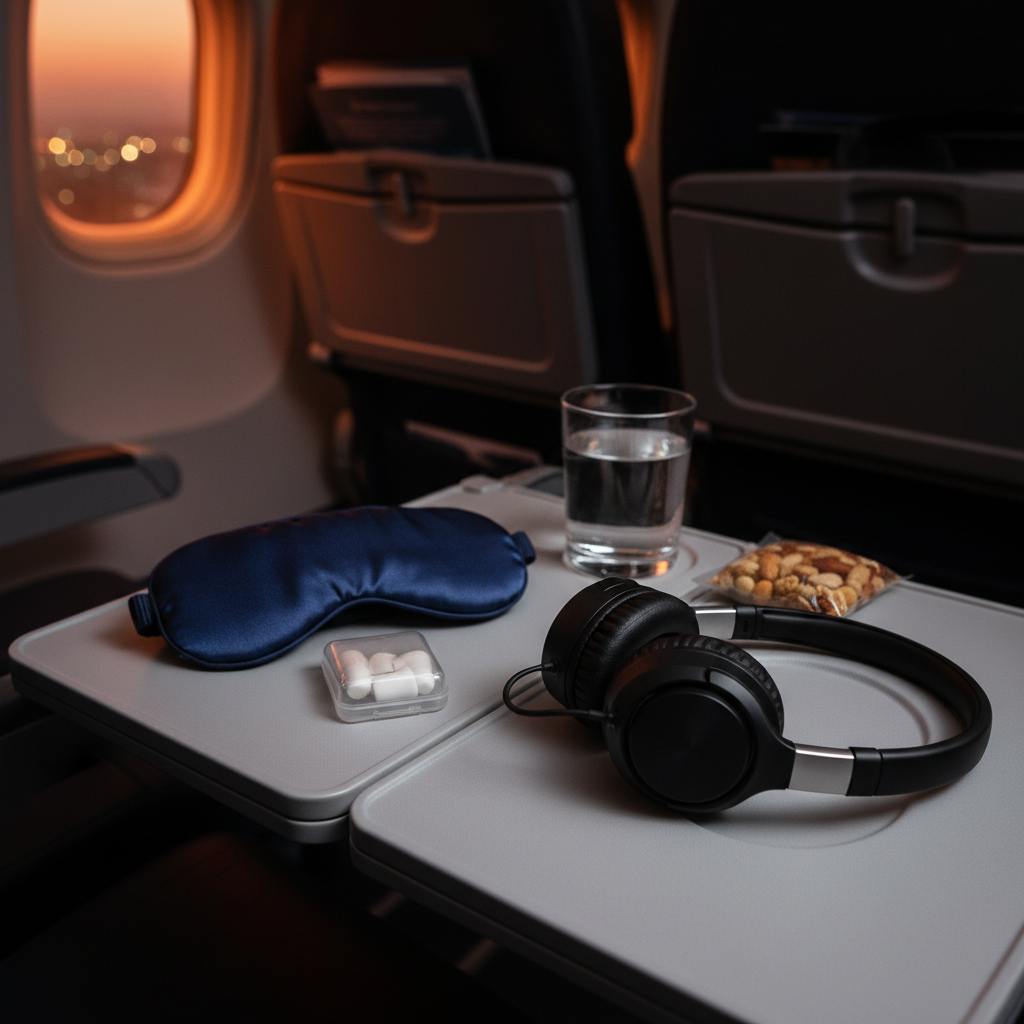
Use food, caffeine, and alcohol like levers (not guesses)
Many people blame the seat, but their timing does the real damage. Heavy meals, late caffeine, and alcohol can fragment sleep even when you feel drowsy.
- Caffeine: if you’re sensitive, consider stopping 6–8 hours before your intended sleep block, many people underestimate how long it lingers.
- Alcohol: it may help you fall asleep, but sleep quality often drops and dehydration risk rises, especially in dry cabin air.
- Meals: aim for “satisfied, not stuffed.” A lighter meal plus a simple snack later usually beats one huge tray dinner.
- Hydration: sip steadily, then taper slightly before your sleep window so bathroom trips don’t break your best stretch.
According to NIH, caffeine can affect sleep timing and quality, and individual sensitivity varies, so your best plan may require a couple flights of experimentation.
Bring a small “sleep kit” that earns its space
You don’t need a suitcase of gear. A compact kit prevents the midnight scramble for items in the overhead bin, which usually ruins your momentum.
| Item | Why it helps | What to look for |
|---|---|---|
| Eye mask | Blocks aisle glare and screen light | Contoured, breathable, adjustable strap |
| Earplugs | Reduces micro-wakeups from voices and clinks | Comfortable for side pressure, spare pair |
| Neck or wrap pillow | Stops head drop and neck strain | Supportive, not overly tall, washable cover |
| Light layers | Adapts to cabin temperature swings | Soft hoodie, socks, optional beanie |
| Water + lip balm | Dry air can wake you up | Refillable bottle, unscented balm |
Key point: keep the kit under the seat in front of you, not overhead, so you can set up fast without standing up.
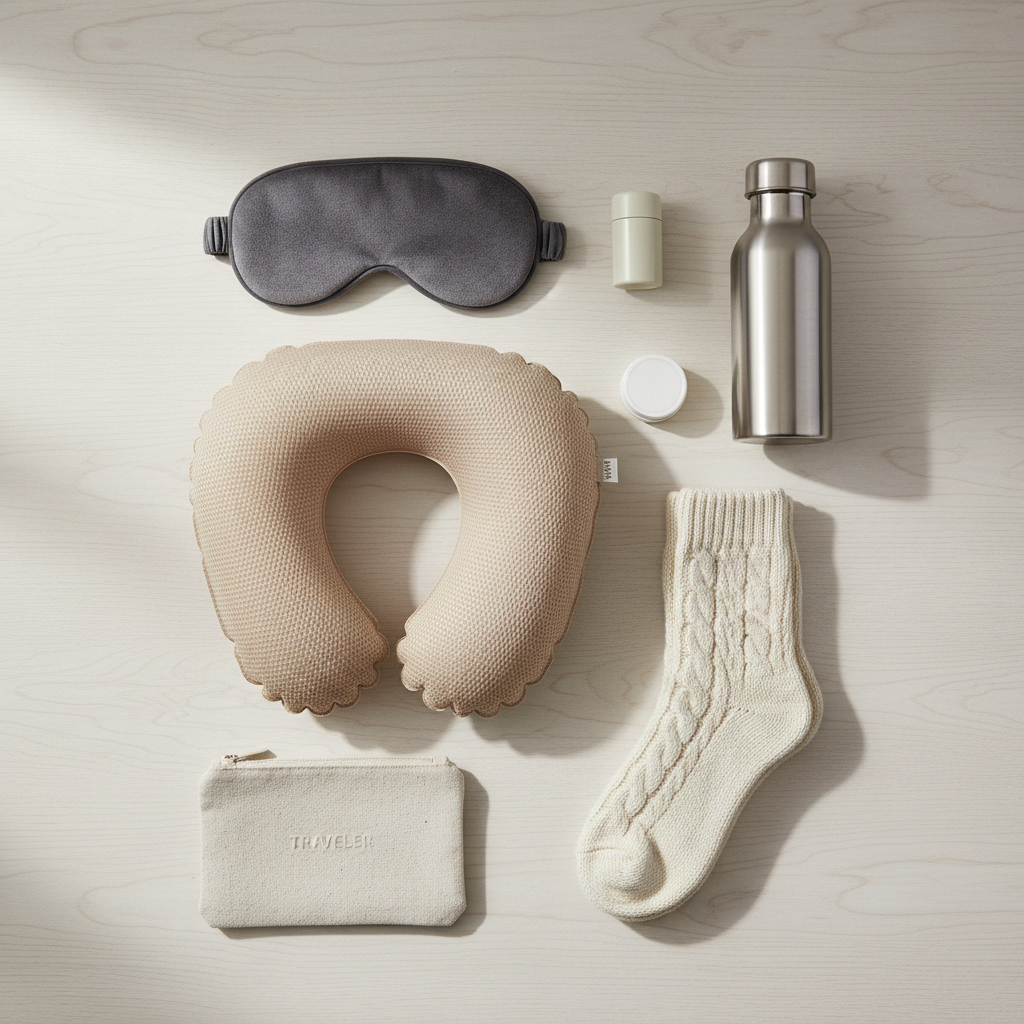
Real-world sleep checklist: what’s keeping you awake?
If you’re still stuck, diagnose the main blocker instead of adding more tricks. Most flyers have one dominant issue.
- Neck pain or head bob: pillow mismatch, seat too upright, or headphone pressure.
- Restless legs or constant shifting: feet unsupported, tight waistband, dehydration, or too much caffeine.
- Waking up every 20–40 minutes: noise/light leakage, anxiety about missing service, or belt checks.
- Can’t fall asleep at all: timing misaligned with body clock, screen use too close to bedtime, or stress spike.
For screens, a simple rule tends to help: lower brightness early, switch to audio, and let your body settle. “Just one more episode” rarely ends as planned in a cabin.
Step-by-step: a simple routine for overnight flights
This is the closest thing to a repeatable recipe. Customize it, but try keeping the order, it reduces decision fatigue.
- Before boarding: eat something reasonable, fill your bottle after security, and use the restroom even if you “don’t really need to.”
- After takeoff: set seatbelt over blanket, set pillow and lumbar support, stash essentials in seat pocket or your kit.
- When cabin lights dim: eye mask on, earplugs in, choose one audio track (white noise, calm playlist, or a familiar podcast at low volume).
- If you wake up: avoid checking the time repeatedly. Take a few slow breaths, adjust one thing (mask seal, pillow angle), then try again.
- Pre-landing: open the shade or remove the mask when you’re ready to be awake, drink water, do a gentle neck and ankle roll.
According to Mayo Clinic, jet lag often improves with light management and gradual schedule shifts, so treating wake-up time as intentional can make arrival feel less brutal.
Meds and supplements: what to consider, and when to ask a pro
People search how to sleep better on a plane and quickly land on melatonin or sleep aids. They can help some travelers, but they can also create next-day fog or interact with other medications.
- Melatonin: often used for body-clock shifting rather than “knockout sleep.” Timing matters, and it may not suit everyone.
- OTC sleep aids: can cause grogginess, dry mouth, or confusion on waking, which is risky in an unfamiliar environment.
- Prescription meds: only under a clinician’s guidance, especially if you have sleep apnea, anxiety disorders, or take other sedating meds.
If you’re considering any sleep medication for flying, especially for the first time, talk with a healthcare professional and test on a non-travel night. Also keep in mind safety: you may need to wake quickly for instructions, turbulence, or a seat change.
Conclusion: make plane sleep boring on purpose
Better rest in the air usually comes from boring consistency: a stable posture, less light and noise, and a routine your body recognizes. Pick two or three changes for your next flight, then keep what works and drop what doesn’t.
If you want a simple starting plan, pack a small sleep kit, set your seat up right after takeoff, and protect one realistic sleep block based on your landing time, those three moves cover most situations without turning travel into a science project.