
How to island hop in croatia by ferry comes down to three things: choosing a realistic route, buying the right tickets for your timing, and understanding which ports and ferry types actually match your plan.
A lot of travelers land in Split or Dubrovnik with a loose wish list, then lose half a day to sold-out sailings, awkward connections, or a port that is “close” on a map but not in real life. Croatia’s islands are easy to reach, but the ferry system rewards a little structure.
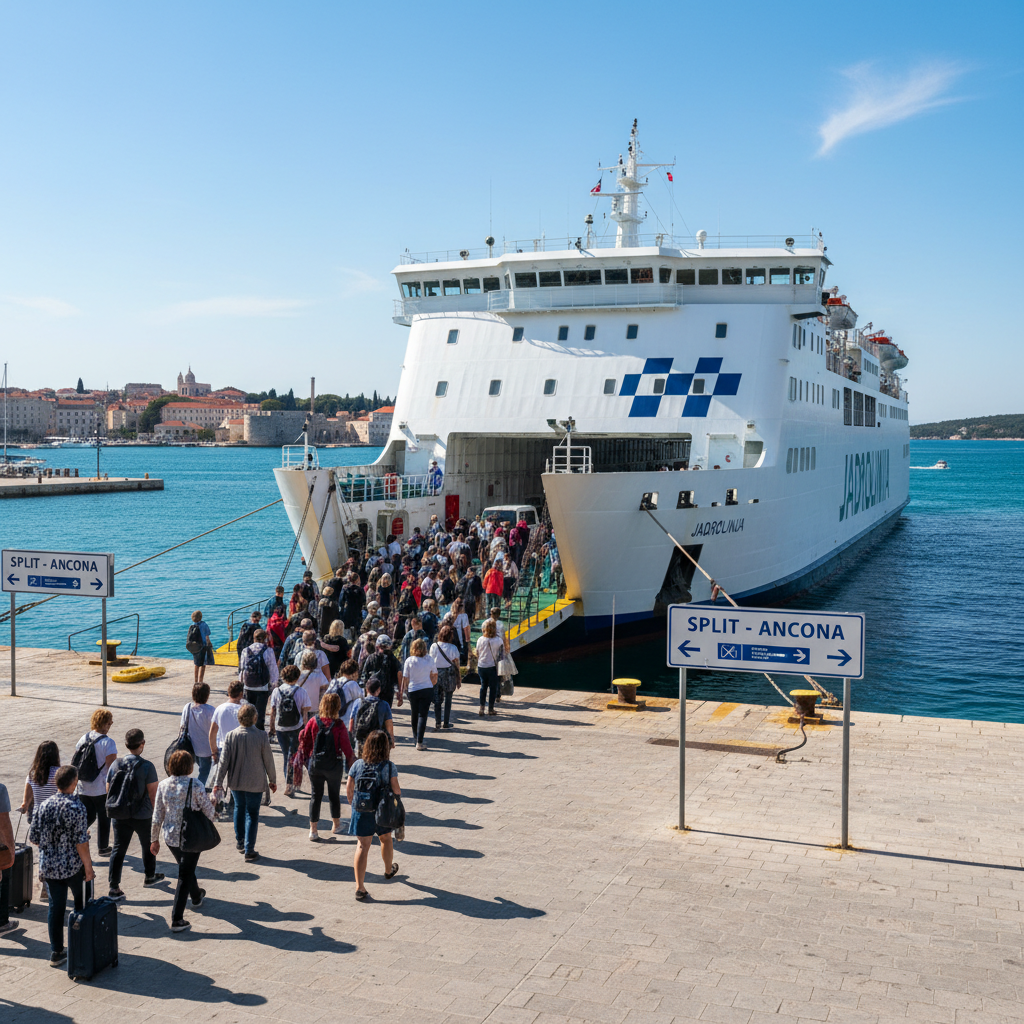
This guide focuses on practical decisions: where to start, how to read schedules, when to prebook, and how to keep your itinerary flexible without gambling on your next crossing.
Understand the ferry network (and why it feels confusing)
Croatia has multiple ferry operators, different vessel types, and seasonal schedules that shift a lot between summer and shoulder months. On top of that, “ferry” can mean a big car ferry, a fast catamaran, or a smaller local line, and they do not all serve the same ports.
- Car ferries: slower, often cheaper, more luggage-friendly, and more forgiving for walk-on travelers, but fewer departures on some routes.
- High-speed catamarans: faster and great for island-to-island days, but more likely to sell out in peak season, and usually no cars.
- Local vs. tourist-timed routes: many connections ramp up in summer, then shrink in frequency outside peak months.
According to Jadrolinija (the main national ferry operator), timetables vary by season and route, and travelers should check the current schedule close to departure. In practice, this means you should stop relying on a blog screenshot from last year.
Pick a route that fits your trip length (3, 5, or 7+ days)
If you try to “see all the islands,” you will spend more time hauling bags than swimming. A better approach is to pick one anchor city and one island cluster, then build outward.
Common starting points for Americans tend to be Split or Dubrovnik because flights and hotels are plentiful. Zadar is underrated if you want fewer crowds and easy access to northern islands.
Sample itineraries you can actually execute
- 3 days (Split base): Split → Hvar Town (Hvar) → day trip to Pakleni Islands → back to Split.
- 5 days (Split + one more island): Split → Brač (Bol or Supetar) → Hvar → Split.
- 7+ days (one-way style): Split → Vis → Hvar → Korčula → Dubrovnik (or reverse).
If your trip is under five days, focus on fewer ferry days. You will still feel like you “did Croatia,” and you will sleep better.
Use this quick self-check before you buy tickets
Before committing to any crossing, run a short reality check. This saves you from booking a perfect-looking itinerary that collapses the moment you arrive at the port.
- Are you traveling July–August? Expect lines, sold-out catamarans, and limited late-day options.
- Do you need a car? If yes, you’re looking at specific car-ferry routes and earlier arrivals at the port.
- Is your hotel on the same island port? “Hvar” can mean Hvar Town, Stari Grad, or another harbor, and they are not interchangeable.
- How tight is your connection? Under 60–90 minutes between ferries can feel tight, especially if one runs late.
- Are you prone to motion sickness? Fast boats can feel bumpy; a pharmacist or clinician can advise on options if you’re unsure.
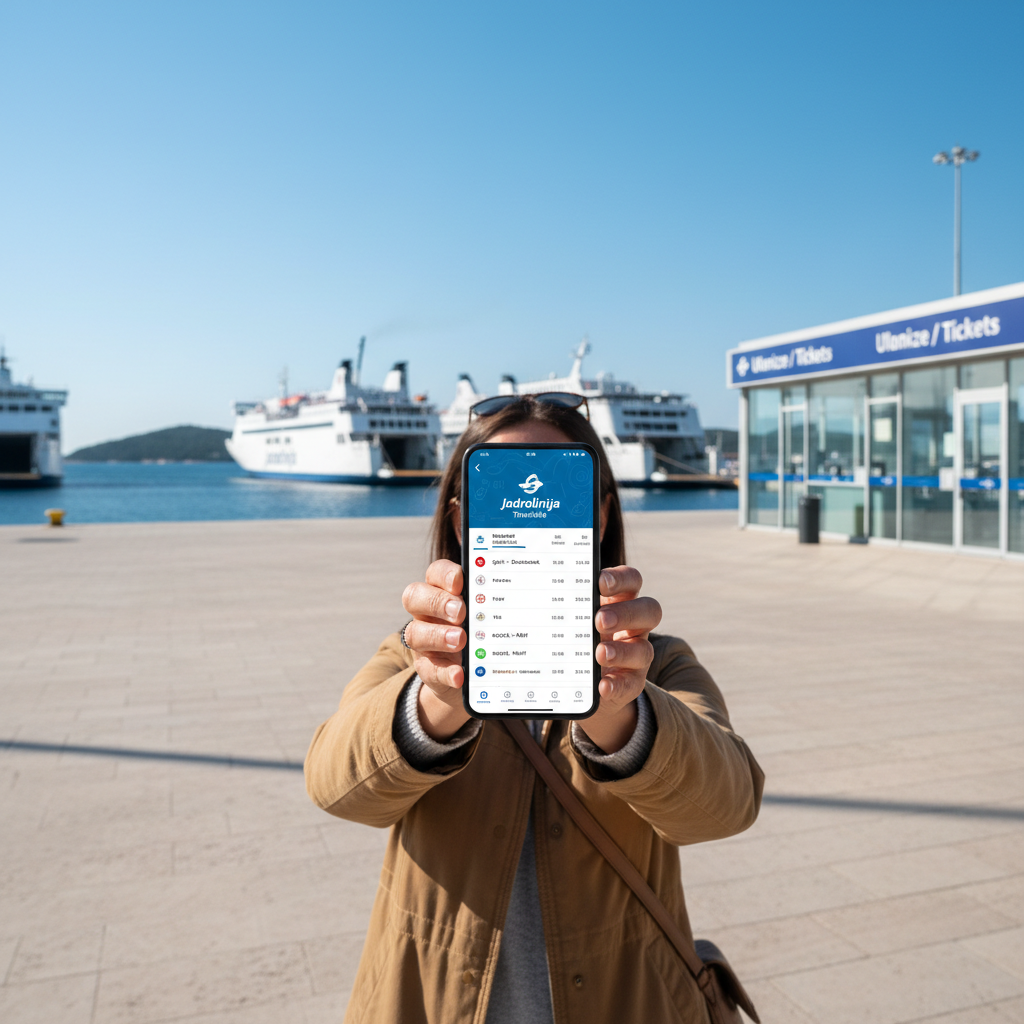
This checklist also helps you decide how to island hop in croatia by ferry without locking yourself into a plan you secretly don’t want to follow.
Booking tickets: when to reserve, where to buy, what to screenshot
In shoulder season, you can often buy tickets the day of travel. In peak summer, popular departures can sell out, especially high-speed sailings on weekends and changeover days.
What to book in advance (most of the time)
- High-speed catamarans on Split–Hvar, Split–Vis, Dubrovnik–Korčula routes in July/August.
- Car ferries if you must travel on a fixed day and time, or if you’re arriving late and need the last sailing.
- One-way “chain” days (island-to-island transfers) where missing one boat breaks the whole day.
Where to buy
- Operator websites (often best for accuracy and conditions).
- Port ticket offices for walk-up purchases, useful if you want flexibility.
- Authorized resellers can be convenient, but double-check fees, baggage rules, and refund terms.
Save these details: sailing time, port name (exact harbor), booking reference, and baggage rules. A simple screenshot can be a sanity-saver when cell service dips near the terminal.
Ports, timing, and luggage: how to avoid losing half a day
Most “my ferry day went sideways” stories come from timing mistakes, not navigation. Ports get busy, and the boarding process can feel informal if you expect airline-style structure.
- Arrive early: for walk-on passengers, 30–45 minutes usually works; for cars, many travelers aim for 60–90 minutes in peak season.
- Travel light: cobblestones, stairs, and short transfers add friction fast, especially if you hop islands frequently.
- Know your arrival port: some islands have multiple harbors, and your bus/taxi plan depends on the right one.
- Keep cash and a card: kiosks and cafés vary, and small purchases can be card-unfriendly in some spots.
One more thing people miss: the most scenic route is not always the most practical. If you’re carrying luggage in midday heat, the “fastest” option sometimes feels slower.
Island-to-island strategy: build a chain, not a spiderweb
When people ask how to island hop in croatia by ferry, they often picture bouncing between islands every morning. It can work, but it’s smoother when you move in one direction and avoid backtracking.
A simple planning rule
- Choose one anchor (Split, Dubrovnik, Zadar).
- Choose 2–3 islands in a line (example: Vis → Hvar → Korčula).
- Leave at least one “no-ferry” day for beaches, hikes, wineries, or weather buffer.
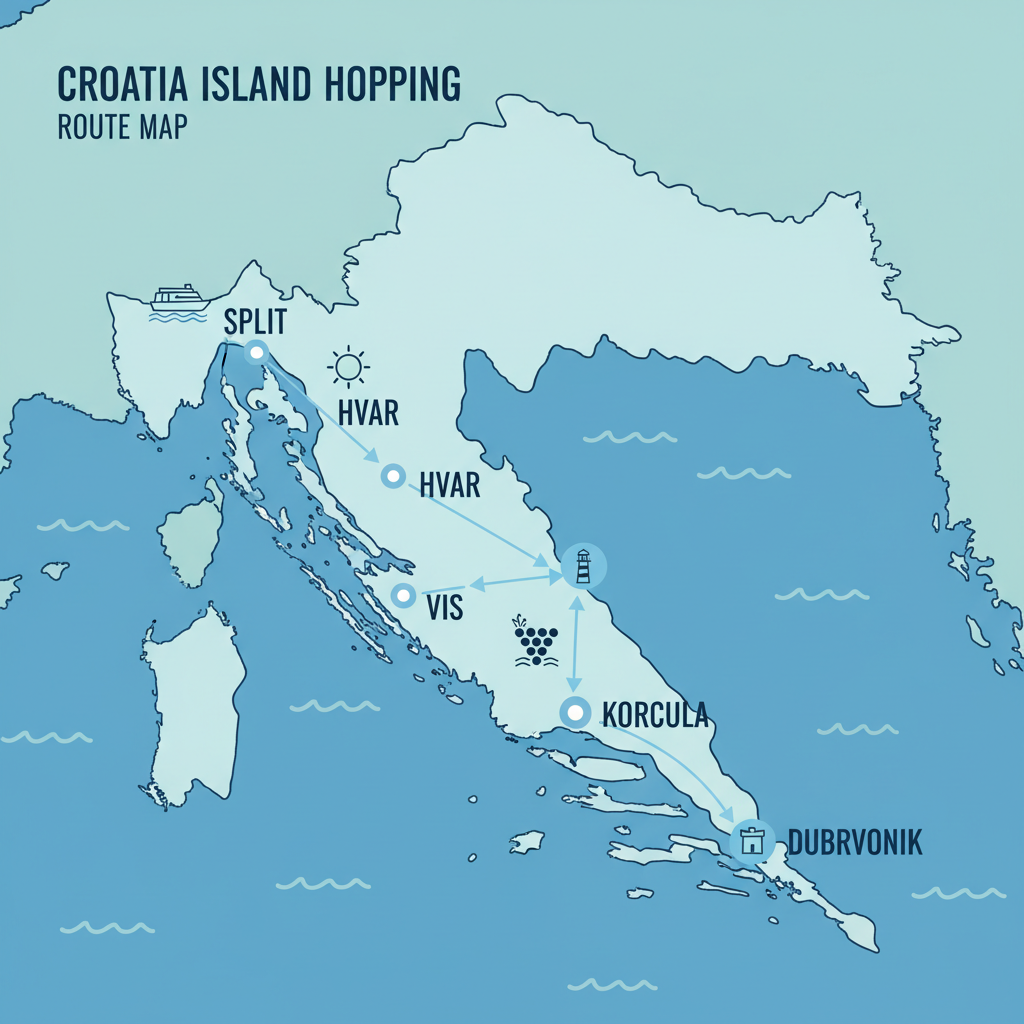
This “chain” approach makes connections more predictable, and it reduces the number of times you have to solve the same logistics puzzle.
Cheat sheet table: what to prioritize by travel style
Use this table to match your priorities to the ferry choices that usually fit best, then confirm details with current timetables.
| Travel style | What to prioritize | Typical ferry choice | Planning tip |
|---|---|---|---|
| First-time visitor | Simple logistics, frequent departures | Split ↔ Brač or Split ↔ Hvar | Book popular times, leave midday flexible |
| Slow travel | Fewer moves, deeper island time | Car ferry or slower lines | Stay 3+ nights per island |
| Beach focus | Access to specific towns/beaches | Choose ports near your beach goals | Check whether arrival port matches your hotel area |
| Nightlife + dining | Late returns, walkable towns | Fast boats where available | Avoid last sailing pressure, consider overnight stays |
| With a rental car | Vehicle capacity, boarding rules | Car ferries only | Arrive early, confirm vehicle category during booking |
Practical tips that make ferry-hopping feel easy
These are the small moves that experienced travelers do almost automatically, and they reduce stress more than any “perfect itinerary” ever will.
- Travel earlier in the day when possible, delays hurt less and backups exist.
- Avoid ultra-tight connections, especially if you must switch ports or cross town between terminals.
- Pack a small ferry kit: water, a snack, sunscreen, a light layer, and a battery pack.
- Check weather and sea state: fast boats can be more sensitive; if conditions look rough, build slack into your day.
- Keep Plan B: know the next sailing, or whether a bus/taxi to another port changes your options.
Common mistakes (and what to do instead)
- Mistake: booking “Hvar” without checking the port.
Do instead: confirm whether you arrive in Hvar Town or Stari Grad and plan the transfer. - Mistake: planning island changes every day.
Do instead: stay at least two nights on most islands, your trip feels bigger, not smaller. - Mistake: assuming summer frequency exists year-round.
Do instead: re-check schedules for your exact week, especially May, October, and winter months. - Mistake: treating the ferry like a flight.
Do instead: arrive early, follow local signage, and keep documents handy, but expect a looser flow.
When it makes sense to get extra help
Most travelers can plan this on their own, but a few situations benefit from a travel advisor or local support, especially if you’re juggling tight dates.
- Complex one-way routes with multiple islands and a fixed international flight home.
- Group trips where missed sailings create expensive ripple effects.
- Accessibility needs: ports and vessels vary, and it’s reasonable to ask operators about boarding assistance.
- Seasickness concerns or health constraints: a clinician can advise on medication choices and timing.
According to U.S. Department of State, travelers should review destination-specific travel information and plan transportation with local conditions in mind, which is especially relevant when schedules can shift with weather.
Conclusion: a simple way to plan and actually enjoy the islands
Island hopping works best when you commit to fewer moves, confirm ports and schedules close to departure, and treat ferries as part of the trip rather than an obstacle. If you want a clean starting point, pick one anchor city, choose two islands in a line, then lock in only the sailings that would really hurt to miss.
Key takeaways: build a “chain” route, book high-demand sailings early in summer, arrive earlier than you think for car ferries, and always double-check the exact harbor name before you celebrate.
If you’re planning your own how to island hop in croatia by ferry itinerary, sketch two versions, one optimistic and one relaxed, then travel the relaxed one unless you have a very good reason not to.
FAQ
Do I need to book Croatia ferries in advance?
Often yes in July and August for popular high-speed routes, while shoulder season can be more flexible. If you have a fixed hotel check-in or a flight connection, prebooking usually reduces stress.
Is island hopping better from Split or Dubrovnik?
Split typically offers more island options and frequent departures, while Dubrovnik works well for southern islands like Korčula and Mljet. Your best choice depends on where you fly in and how many ferry days you want.
Can I bring luggage on Croatian ferries?
Yes, but rules vary by operator and vessel type. High-speed catamarans may have stricter baggage handling, so it’s smart to verify limits during booking and pack so you can carry everything comfortably.
What’s the difference between a car ferry and a catamaran?
Car ferries are larger and slower, often with more space and the option to take vehicles. Catamarans are faster and convenient for island-to-island moves, but they can sell out and usually don’t take cars.
How early should I arrive at the ferry port in Croatia?
Many walk-on travelers aim for 30–45 minutes early, while drivers often arrive 60–90 minutes early in peak season. If you’re traveling on a weekend or a holiday period, adding extra buffer is rarely wasted.
What if my ferry gets canceled due to weather?
Cancellations can happen, especially with faster boats in rough seas. Check the operator’s updates, go to the ticket office for rebooking options, and keep a backup plan such as the next sailing or an overnight stay.
Can I island hop in Croatia by ferry in October or April?
Yes, but expect fewer departures and some routes to disappear outside summer. Plan fewer islands, avoid tight connections, and confirm schedules close to your travel dates.
Lightweight next step
If you’re building a Croatia itinerary and want a more confident plan without overbooking everything, a simple route review can help you spot port mix-ups, risky connection times, and the sailings worth reserving so your ferry days stay calm.